Choosing bathroom fixtures is one of those decisions that looks easy until you actually start shopping. A toilet may look perfect, but will it work with your bathroom layout? Should you choose a wall-hung model or a traditional floor-mounted toilet? Is a double vanity really worth the extra space? And when it comes to showers, do you actually need a rain shower, hand shower, body sprays, or all three?
The right bathroom fixtures should do more than match the tile. They need to suit the size of your bathroom, the way you use it, your comfort preferences, and the practical requirements behind the walls.
Whether you’re planning a primary bathroom, family bathroom, guest bath, or powder room, this guide will walk you through the main choices—from toilets and basins to bathtubs, faucets, and shower systems—so you can make decisions with a clearer idea of what will work in your space.
Start With Your Bathroom and Daily Routine
Before looking at specific bathroom fixtures, take a step back and think about the bathroom itself.
A primary bathroom used by two adults may have very different requirements from a guest bathroom used occasionally. A family bathroom may need durable, easy-to-clean fixtures, while a powder room can focus more heavily on appearance because it has fewer functional demands.
Start with a few basic questions:
- How large is the bathroom?
- How many people will use it?
- Will more than one person use it at the same time?
- Do you prefer taking showers, baths, or both?
- How much storage do you need?
- Do you need additional privacy or accessibility features?
- Where are the existing or planned plumbing connections?
Layout matters too. The clearance around a toilet, vanity, and shower should feel comfortable rather than crowded. Door swings should not interfere with fixtures, and wet and dry areas should be planned around the way you actually move through the room.
For example, a double vanity can make a primary bathroom much more convenient for a couple, but only if there is enough room for two people to use it comfortably. Likewise, a large freestanding bathtub may look beautiful but become impractical if it leaves too little clearance around the rest of the bathroom.
The right fixture starts with the space and your routine—not with the product itself.
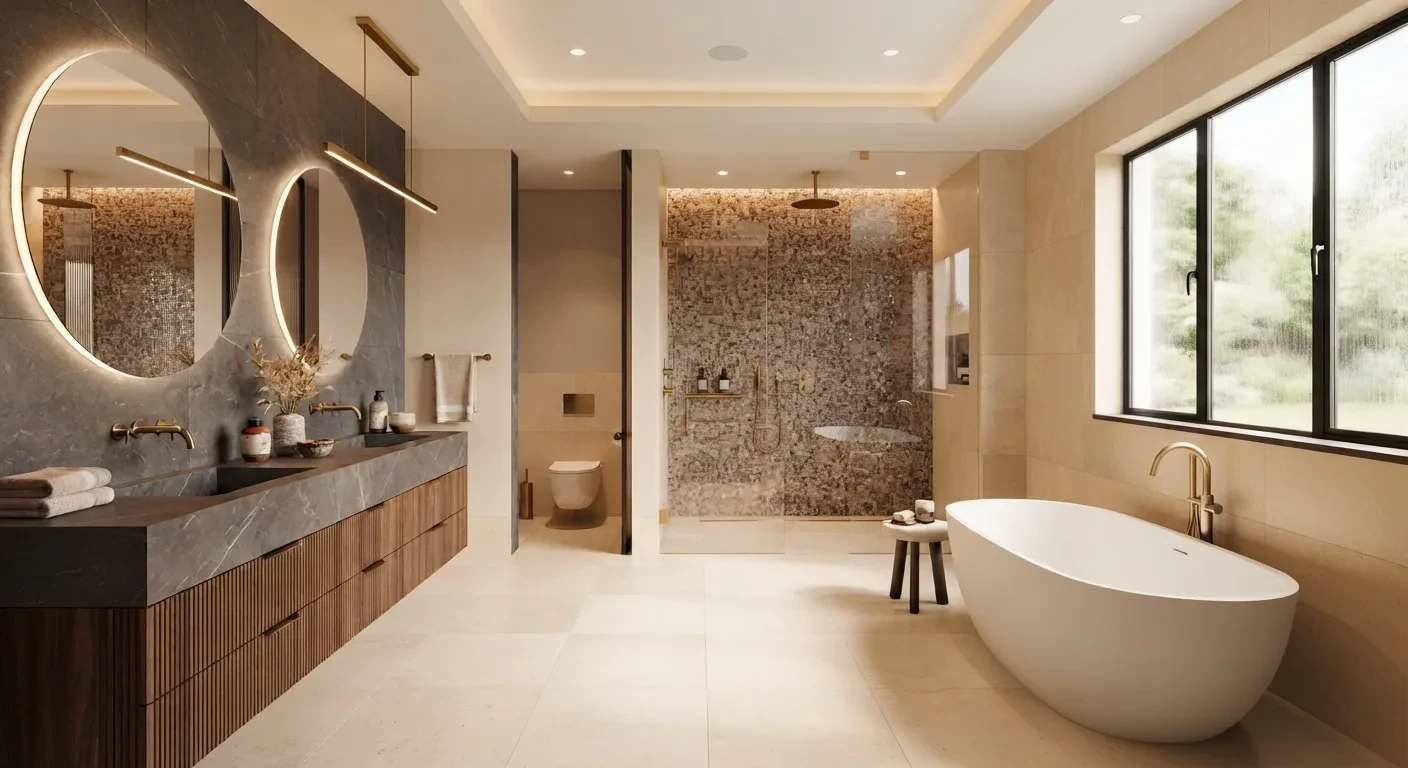
Luxury Primary Bathroom With Dark Gray Stone Vanity
Choosing the Right Toilet
The toilet is one of the most frequently used fixtures in any bathroom, so performance, hygiene, comfort, and appearance should all be considered—not just how it looks.
Wall-Hung vs. Floor-Mounted Toilets
A wall-hung toilet is mounted to the wall, with the cistern and mounting frame concealed behind the wall or a service panel. It creates a lighter, more streamlined appearance, frees up floor space, and makes cleaning around the base easier.
A floor-mounted toilet sits directly on the floor and remains a familiar, straightforward choice, with generally simpler installation and easier access to components for servicing.
| Wall-Hung Toilet | Floor-Mounted Toilet | |
| Appearance | Clean, minimal | More traditional |
| Floor cleaning | Easier around the base | More areas to clean |
| Cistern | Usually concealed | Usually exposed or integrated |
| Installation | Requires concealed frame and suitable wall structure | Generally simpler |
| Maintenance | Requires planned service access | Components are typically easier to access |
Neither is automatically better. A wall-hung toilet can be a strong choice for a contemporary bathroom where a clean architectural look is important, while a floor-mounted model may make more sense when simpler installation, accessibility, or servicing is a priority.
If you choose a wall-hung model, make sure the wall depth, concealed cistern, mounting frame, and service access are planned before installation. A properly accessible service panel is important for future maintenance.
Smart Toilets and Bidet Features
Smart toilets and bidet features can add another level of hygiene, comfort, and everyday convenience. Depending on the model, features may include integrated bidet washing, heated seats, warm-air drying, automatic flushing, motion-activated lids, night lighting, and deodorization.
You do not necessarily need every available feature. Ask yourself a simple question: Which functions will you actually use every day?
For some homeowners, an integrated bidet and heated seat may be enough. Others may value automatic flushing, a night light, or hands-free operation. In a high-end primary bathroom, an integrated smart toilet can also reduce the need for separate bidet fixtures.
Smart toilets may require dedicated electrical power and specific plumbing connections, so confirm the requirements of your chosen model before installation rather than assuming they can be added later.
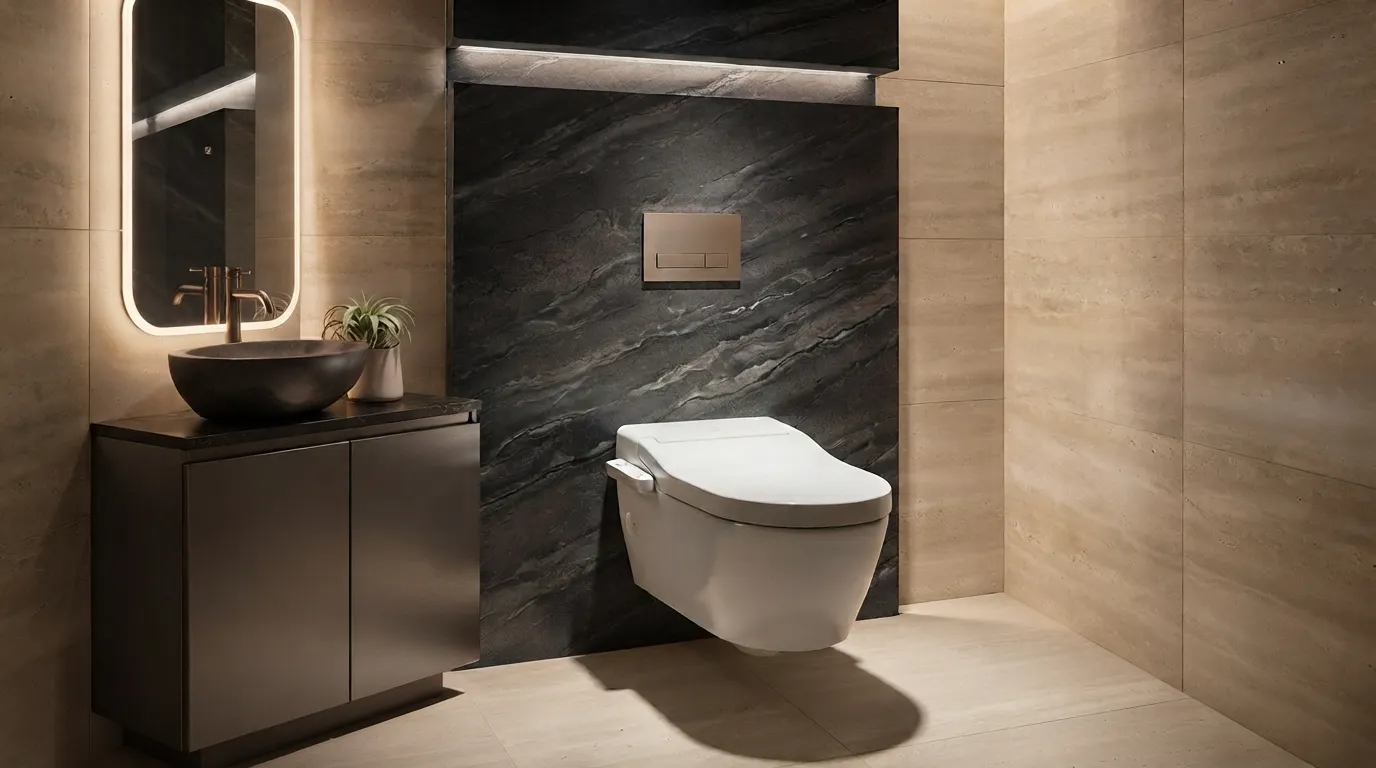
Modern Powder Room With Wall-Hung Smart Toilet
Choosing a Basin and Vanity
The sink area has a major impact on both the appearance and everyday usability of your bathroom. It is also where you may spend several minutes every morning, so small design choices can have a noticeable effect.
Vessel, Undermount, or Integrated Basin?
A vessel basin sits above the countertop and can make the sink itself a visible design element. It works well when you want the basin to contribute more to the overall look, but make sure the countertop height keeps the basin comfortable to use.
An undermount basin sits below the countertop, creating a cleaner surface and making it easy to wipe water directly into the sink.
An integrated basin combines the basin and countertop into one continuous piece. With fewer joints and seams, it can create a streamlined appearance while making it less likely for grime to accumulate.
Your choice should depend on more than style. Consider countertop space, cleaning, basin depth, splash control, faucet placement, and how much of the vanity surface you need for everyday products.
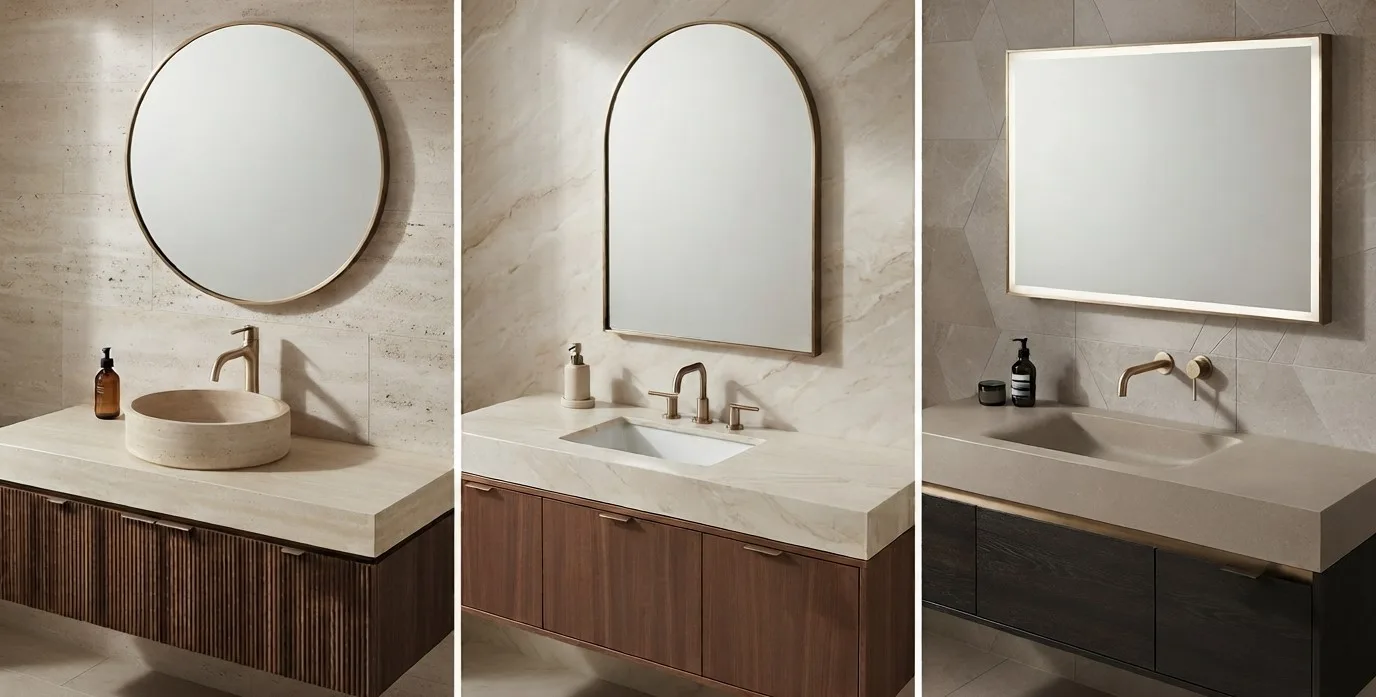
Modern Bathroom Vanities Comparison: Vessel, Undermount & Integrated Basin Styles
Single vs. Double Vanity
For a primary bathroom, the choice between a single and double vanity often comes down to how the bathroom is actually used.
A double vanity can make sense when two people regularly get ready at the same time. It provides separate sink areas, additional counter space, and often more storage.
But a double vanity may not be the best choice for every bathroom. If the bathroom is relatively compact, two sinks may leave less room for drawers, circulation, or other fixtures. A well-planned single vanity with generous counter space and practical storage can sometimes work better.
So, consider the full arrangement, including the vanity width, mirror size, lighting, storage, and clearance in front of the cabinet.
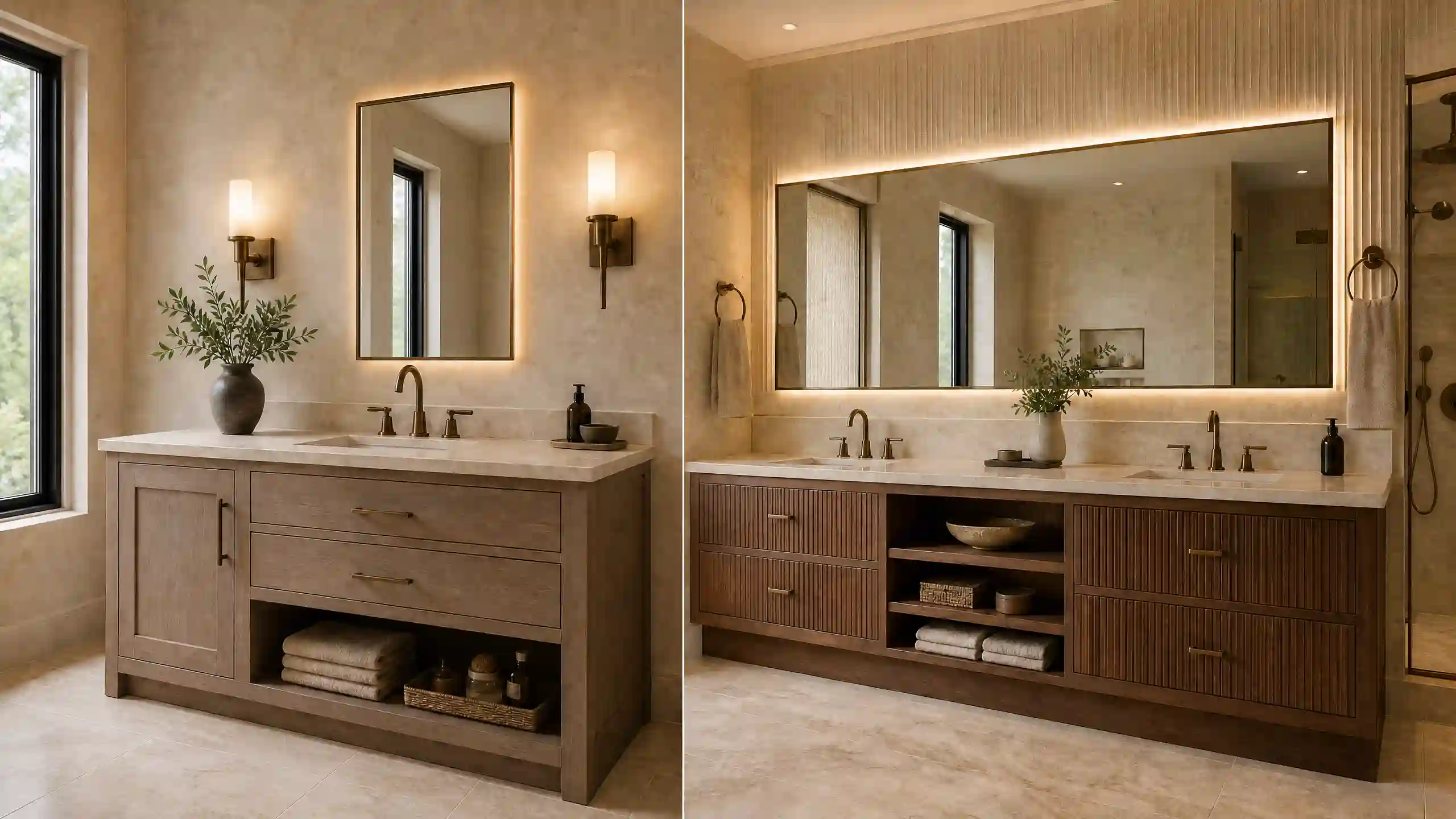
Luxury Bathroom Interior Comparison: Single Vanity & Double Vanity
Vanity Materials
Vanity materials should suit both the look of the bathroom and its daily use.
Natural stone can add visual depth and distinctive veining, while ceramic offers a durable, easy-to-maintain surface. Solid-surface materials can provide a clean, uniform appearance with fewer visible seams.
The surrounding tile, wall finish, and cabinetry should also be considered at the same time. A beautifully chosen basin can still feel out of place if the vanity proportions or countertop do not relate to the rest of the bathroom.
Choosing Faucets and Bathroom Fittings
Faucets are small compared with many bathroom fixtures, but they are among the things you interact with most often. That makes quality, operation, and finish particularly important. Beyond the external design, the internal engineering also affects how a faucet performs through years of daily use.
Wall-Mounted vs. Deck-Mounted Faucets
Deck-mounted faucets are installed directly on the vanity or countertop. They are common and generally straightforward to access, service, and replace.
Wall-mounted faucets are installed into the wall above the basin. They can create a cleaner countertop and a more architectural appearance while also making the counter easier to clean, but the plumbing and rough-in need to be planned before the wall is finished.
The basin depth, spout reach, faucet height, and user position should all work together. A faucet that looks beautiful but does not reach the right point in the basin will quickly become frustrating.
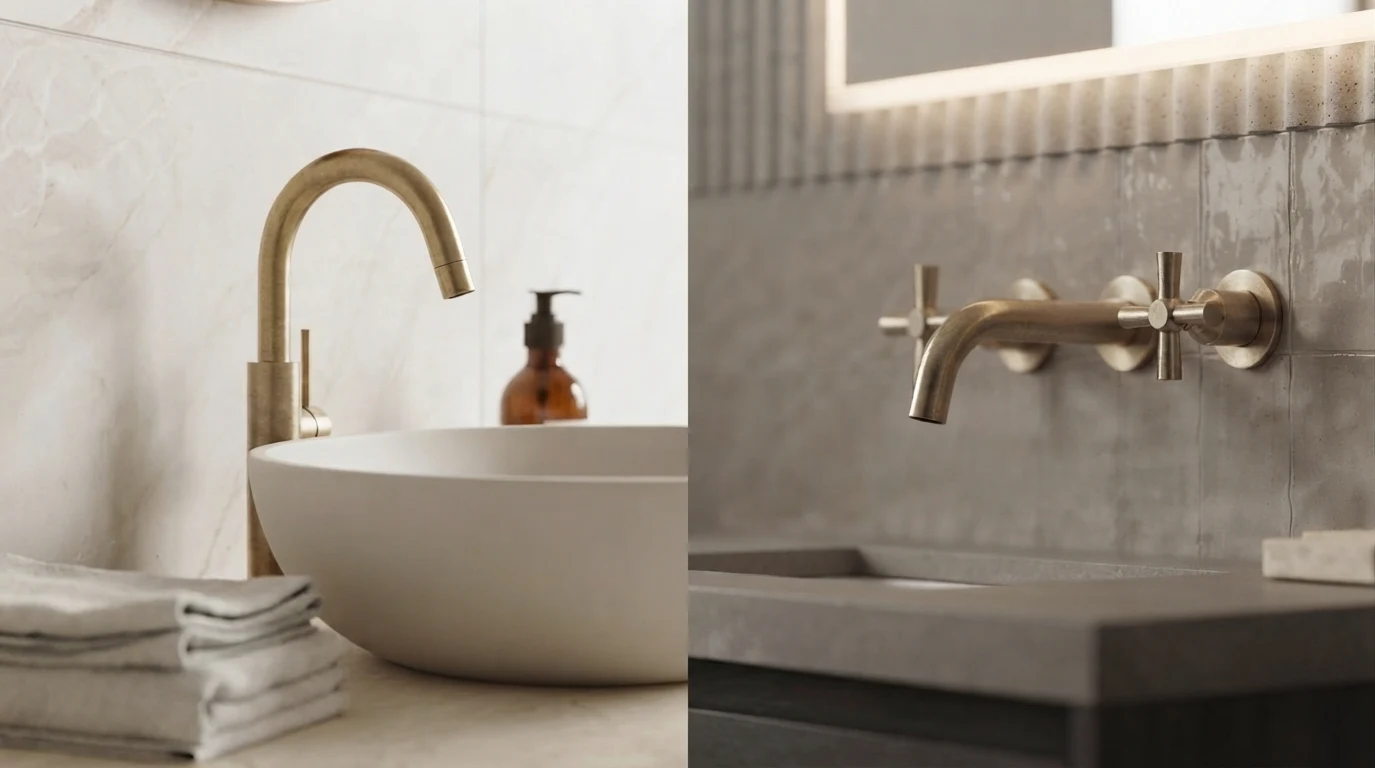
Close-Up Comparison Of Deck-Mounted & Wall-Mounted Bathroom Faucets
What to Look for Inside the Faucet
The outside design is only part of a faucet’s quality.
A high-quality ceramic cartridge helps provide smooth handle operation and reliable control of water flow and temperature while reducing the risk of leaks over time. You should also consider how the handle feels, how precisely you can control temperature and flow, and whether the faucet is suited to the intended water pressure.
For shower and bath systems, thermostatic controls can provide more stable temperature control by responding to changes in water pressure elsewhere in the home. They can also help reduce the risk of sudden temperature changes during use.
For products connected to potable water in the U.S., it is also worth checking applicable certification requirements. NSF notes that faucets intended for contact with drinking water are covered by NSF/ANSI/CAN 61 requirements concerning materials that come into contact with drinking water.
Choosing a Faucet Finish
Common finishes include polished chrome, brushed nickel, brushed brass, matte black, gunmetal, and warm bronze. The right choice depends on the overall bathroom design as well as how much maintenance you are comfortable with. Dark or brushed finishes can offer a different visual character from polished chrome, while water spots and fingerprints may appear differently depending on the surface.
For a coordinated bathroom, consider the finish of the faucet, shower controls, flush plate, drains, cabinet hardware, and other visible metal details together. For areas exposed to humidity and frequent cleaning, PVD (Physical Vapor Deposition) is one finishing option to consider because it creates a durable, wear-resistant coating on metal surfaces.
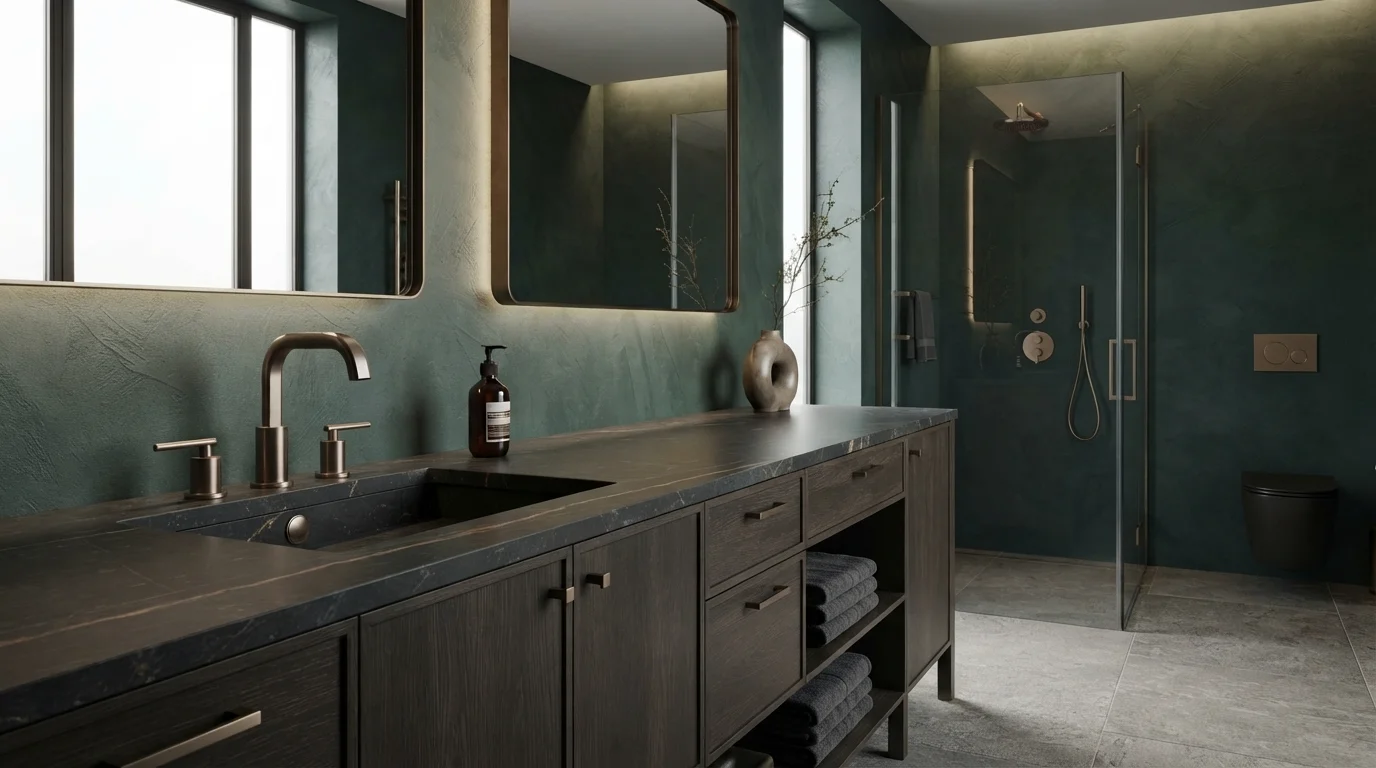
Deep Green Bathroom With Dark Smoked Wood Vanity & Brushed Bronze Hardware
Choosing the Right Bathtub
A bathtub should be selected around both the size of the bathroom and the way you actually plan to use it.
Freestanding vs. Built-In Bathtub
A freestanding bathtub can become a strong visual feature, especially in a larger primary bathroom. Because the tub is visible from multiple sides, its shape and material become part of the room’s overall design. However, make sure there is enough clearance around the tub and that the position of the tub filler and plumbing works with the final layout.
A built-in or alcove bathtub can be more space-efficient and easier to integrate into a practical family bathroom. It can also make use of surrounding walls for storage or showering.
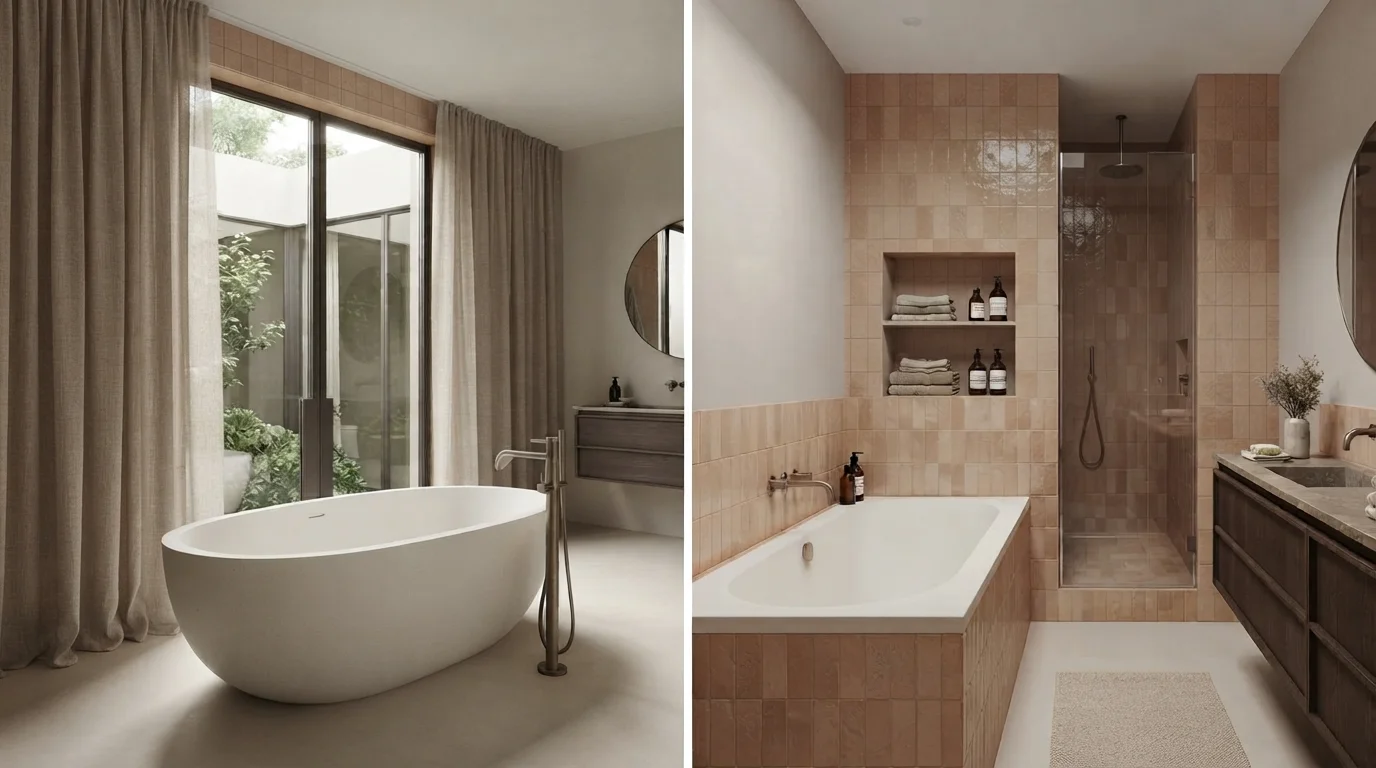
Luxury Bathroom Layout Comparison: Freestanding Bathtub Versus Built-In Bathtub
Soaking vs. Air or Whirlpool Systems
Bathtubs range from simple soaking models to tubs with built-in air or whirlpool systems. A soaking tub is designed primarily for immersion and relaxation, while air and whirlpool systems add massage functions through air jets or water jets.
Air systems generally provide a lighter, bubbling sensation, while whirlpool or jetted systems produce a stronger water massage. These systems require additional components such as pumps and jets, along with electrical planning and regular cleaning and maintenance.
When comparing these options, consider how you plan to use the tub, the level of massage you prefer, and the installation and maintenance requirements. Hot tubs are typically larger spa-style units designed for soaking and hydrotherapy, rather than standard bathroom bathtubs. You may also come across Jacuzzi, a brand name that is sometimes used informally to refer to whirlpool or spa tubs in general.
Material Options
Common bathtub materials include acrylic, solid surface, and cast stone. Acrylic is generally lighter and easier to handle, while solid surface and cast stone can offer a more substantial feel and better heat retention.
The choice should also account for access to the bathroom, floor conditions, and the installation requirements of the specific tub. For heavier cast stone models, check that the floor can support the tub, especially when it will be installed on an upper level.
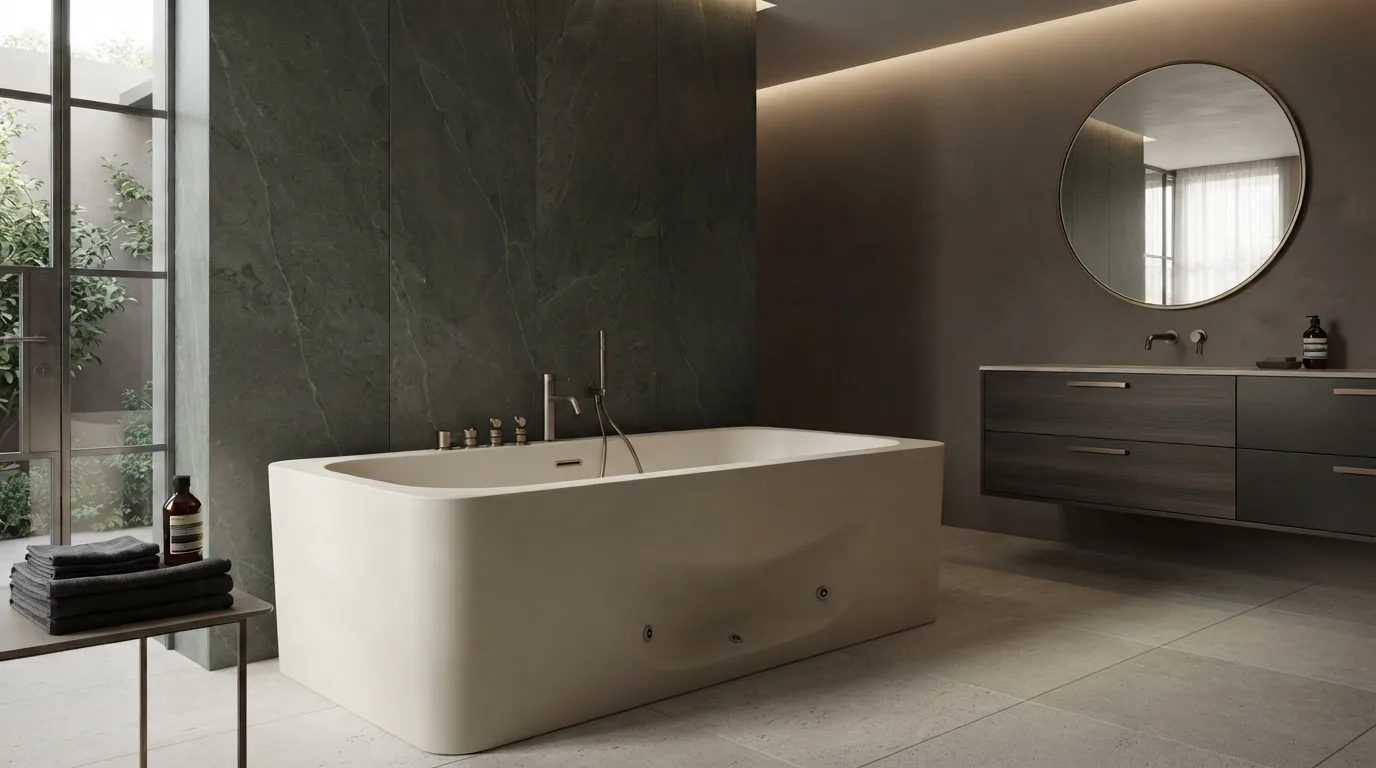
Modern Freestanding Bathtub With Integrated Jets In Dark Contemporary Bathroom Interior
Choosing the Right Shower System
For many modern bathrooms, the shower is where function and personal preference come together most clearly.
What Do You Actually Need?
A shower system can include: overhead rain shower, hand shower, body sprays, multiple outlets, and diverter controls. But you may do not need every component to have a high-end shower experience.
A rain shower can provide broad water coverage, while a hand shower adds flexibility for everyday use and cleaning. Body sprays can provide additional coverage and a more spa-like experience, but they also add installation complexity.
If you plan to use multiple outlets at the same time, make sure the home’s water heater capacity, water pressure, and plumbing lines can support the configuration. Think about how you shower before choosing the setup.
Thermostatic vs. Standard Controls
A standard shower valve allows you to control water temperature and flow through the selected controls.
A thermostatic shower system is designed to maintain a more consistent temperature and can help reduce sudden temperature changes when water demand elsewhere in the home changes. It can also provide added protection against sudden temperature spikes.
For households where more than one person may be using water at the same time, temperature stability can be particularly useful.
The most important thing is to make sure the chosen shower system matches the home’s water supply and the manufacturer’s requirements. A large multi-outlet shower may need more flow than a basic showerhead.
Concealed vs. Exposed Systems
Concealed shower systems place much of the valve body and pipework behind the wall, leaving only the visible controls and shower components exposed. They create a cleaner, more minimalist appearance and work particularly well with contemporary bathroom designs.
However, concealed systems require more precise planning before installation. Make sure suitable service access is incorporated into the design so components can be reached without unnecessarily opening the finished wall.
Exposed systems keep more of the components visible and can offer simpler installation and easier access during future servicing.
The choice depends on how much you value a clean architectural appearance versus accessibility and installation simplicity.
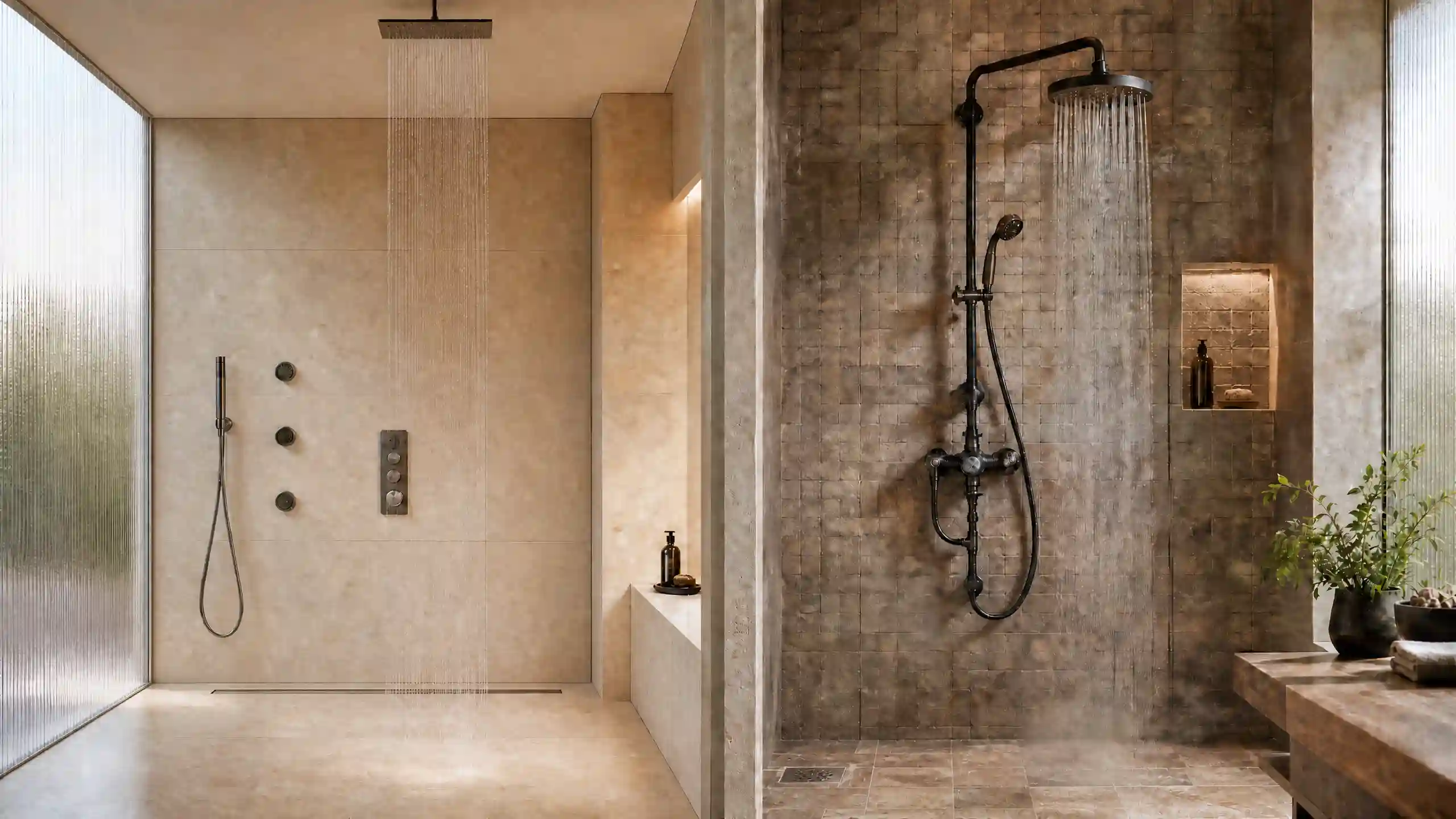
Luxury Shower Systems Featuring Concealed Setup Versus Exposed Shower Fixture
Bathroom Accessories & Finishing Details
Once the main fixtures are selected, the smaller accessories can have a surprisingly large impact on how the bathroom works and feels. These details should be planned as part of the overall design rather than added as an afterthought.
Common bathroom accessories include:
Towel Bars & Rings: Place them within easy reach of the vanity, shower, or bathtub. Choose the size and configuration based on how many towels need to be stored.
Robe Hooks: Useful near the shower, bathtub, or bathroom entrance. Position them where robes and clothing can be reached without interfering with doors or other fixtures.
Toilet Paper Holders: Keep them within comfortable reach of the toilet while making sure the position does not interfere with nearby cabinets or walls.
Floor Drains: Choose a drain that suits the shower layout and floor finish. Proper placement and slope are important for effective drainage and preventing standing water.
Shower Shelves & Niches: Built-in storage can keep shampoos and other products organized while reducing the need for additional fixtures on the shower floor.
Grab Bars: Where accessibility or aging-in-place is a consideration, grab bars can provide additional support. Their location and mounting should be planned before the walls are finished.
Bathroom accessories do not need to be identical, but their finishes should work together. Brushed brass, matte black, chrome, and other finishes can each create a different look, so coordinate towel hardware, hooks, drains, shower controls, and other visible metal details with the main fixtures.
Placement matters just as much as finish. Consider reach, clearance, door swings, and how each accessory will be used in daily routines. Planning these details early can help create a bathroom that feels organized and cohesive rather than pieced together.
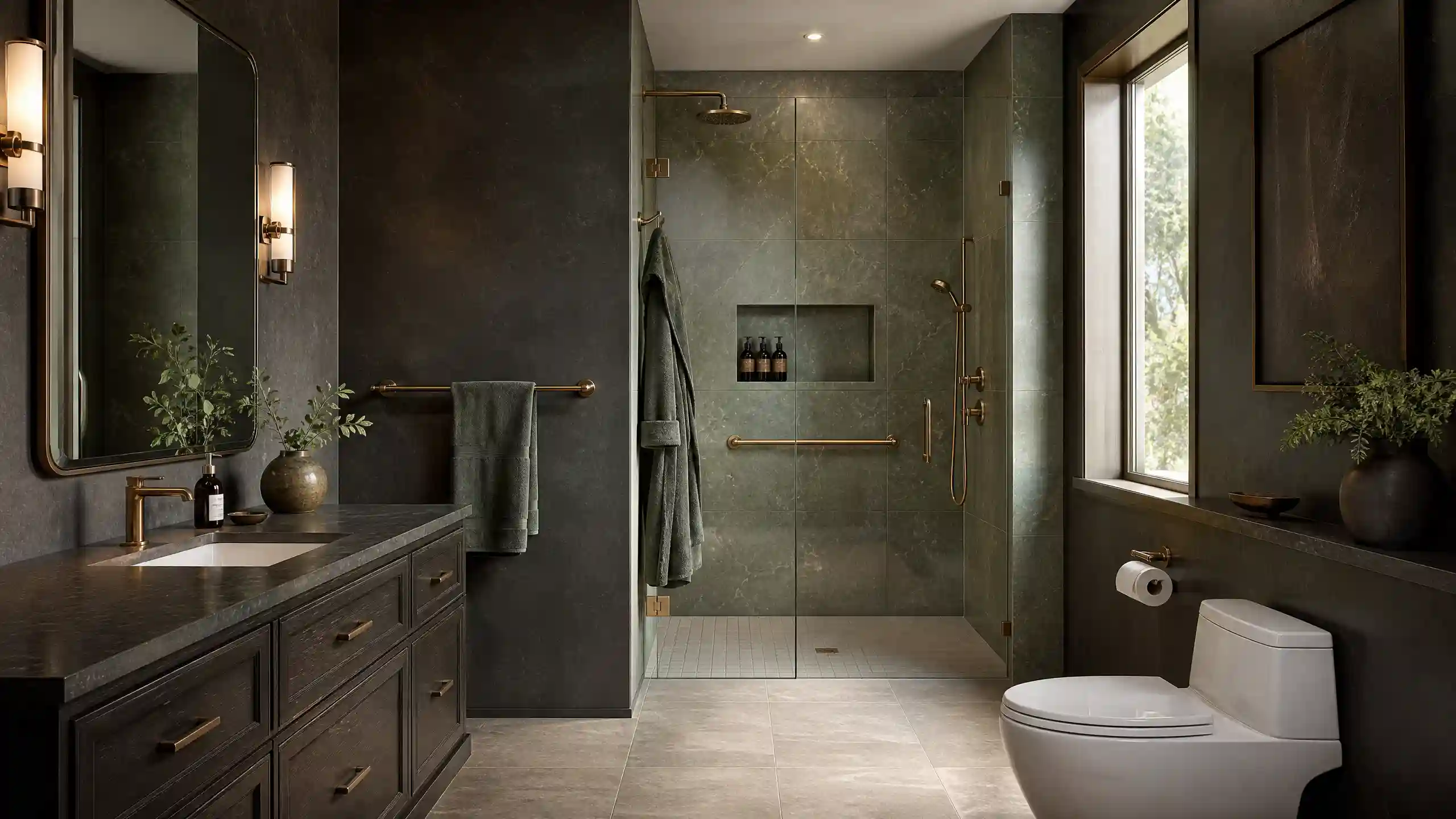
Contemporary Bathroom With Brushed Bronze Fixtures & Accessories
Tips for Comfort, Cleaning & Everyday Maintenance
A bathroom should not only look good when it is finished—it should also be comfortable and easy to live with every day. When comparing fixtures, materials, and finishes, think about how they will work together, how they will perform during regular use, and how much maintenance they will require.
A few practical details can make a noticeable difference:
Easy cleaning: Rimless toilets eliminate the traditional hidden rim, while glazed ceramic and non-porous vanity surfaces are generally easier to keep clean.
Practical storage: Built-in shower niches can keep toiletries organized without relying on hanging caddies that can collect soap residue.
Comfortable access: Leave enough clearance around freestanding bathtubs, toilets, and vanities for comfortable movement and routine cleaning.
Finish care: Different metal finishes have different maintenance needs. Polished chrome can show water spots more readily, while brushed brass and matte black may require more careful cleaning to prevent fingerprints and mineral buildup.
Water efficiency: Consider both water use and performance when selecting fixtures. In North American markets, WaterSense-labeled fixtures can help reduce water consumption while maintaining practical performance.
System performance: Check your home’s water pressure and drainage before choosing high-flow rain showers or other fixtures with higher water demands. The fixture should match the capabilities of the plumbing system.
Easy maintenance: For concealed systems such as cisterns and thermostatic valves, make sure service points and shut-off valves remain accessible.
The best bathroom fixtures are not necessarily the ones with the most features. They are the ones that make the space more comfortable, practical, and manageable over time.
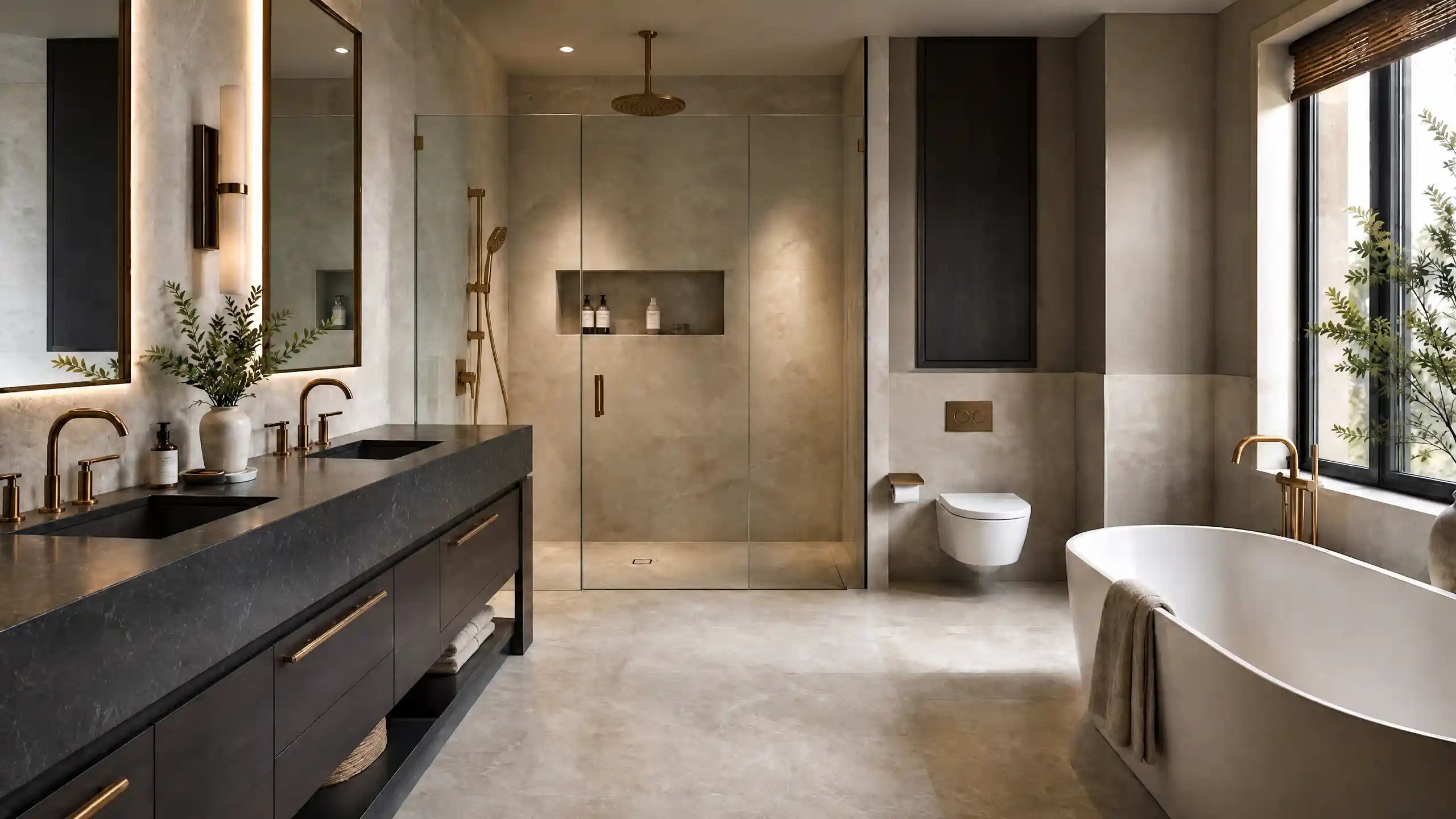
Luxury bathroom with brass fixtures, freestanding tub, and walk-in shower
How to Make Different Bathroom Fixtures Work Together
Once you have chosen individual fixtures, step back and look at the bathroom as a whole.
A floating vanity paired with a wall-hung toilet can create a lighter visual effect because more of the floor remains visible. Brushed bronze fixtures can complement warm stone and cabinetry, while a freestanding bathtub may need a floor-mounted tub filler positioned specifically around its final location.
The same principle applies to proportions. A large double vanity may require a larger mirror and a more substantial lighting arrangement. A compact basin may be better suited to a smaller powder room. A large rain shower can look impressive, but the shower enclosure, ceiling height, water supply, and other fixtures still need to work around it.
You also want the bathroom to relate to the rest of the home. Cabinetry, flooring, doors, lighting, stone, and other finishes should not feel like they were selected by completely different design teams.
You do not need everything to match perfectly. You want everything to feel like it belongs together.
How George Group Supports Complete Bathroom Projects
Choosing bathroom fixtures becomes easier when you can consider the major elements together rather than sourcing every item separately.
George Group provides a range of residential bathroom solutions, including toilets, basins, vanities, bathtubs, shower systems, faucets, and other bathroom fittings. These can also be coordinated with related categories such as marble and stone, ceramic tiles, cabinetry, lighting, and other whole-house elements.
For a new home or complete interior project, this broader approach can make it easier to coordinate finishes, dimensions, and the overall design direction of the bathroom with the rest of the residence.
George Group also supports customized residential projects with product coordination, quality inspection, packaging, and international logistics. For homeowners working on projects from overseas, having related categories coordinated through one team can reduce some of the communication and delivery complexity involved in managing multiple sources.
The George Group showroom in Foshan brings bathroom products and other residential categories together in one place, giving homeowners and design professionals the opportunity to compare materials, finishes, and complete bathroom settings in person.
George Group Sanitary Ware & Bathroom Showroom
Final Thoughts
There is no single best bathroom fixture for every home.
The right choices depend on your bathroom’s size, your daily routine, the level of comfort and convenience you want, and how much attention you want to give to maintenance and long-term performance.
Start with the space, then choose the fixtures. Think about toilets, basins, vanities, bathtubs, showers, and faucets as parts of one bathroom rather than isolated products. When the practical details and visual elements are considered together, the result can feel better to use and better suited to the way you live.
Planning a new bathroom or a complete residential project? Share your ideas with George Group to explore bathroom fixtures and related solutions suited to your space and design direction.
Frequently Asked Questions
What bathroom fixtures should I choose first?
Start with the fixtures that have the greatest impact on the layout: the toilet, vanity, shower, and bathtub if you are including one. Their dimensions and locations affect clearances, plumbing, doors, storage, and the position of other elements.
What is the difference between a wall-hung toilet and a floor-mounted toilet?
A wall-hung toilet is mounted to the wall with the cistern concealed behind it, creating a cleaner appearance and making the floor easier to clean. A floor-mounted toilet sits on the floor and is generally more straightforward to install and service. The right choice depends on your bathroom layout, wall construction, design preferences, and installation requirements.
What is the difference between a regular shower and a thermostatic shower system?
A regular shower system allows you to control flow and temperature through its valve and controls. A thermostatic system is designed to maintain a more consistent water temperature and can help reduce sudden temperature changes. It is particularly useful when precise temperature control is a priority.
Are smart bathroom fixtures worth the investment?
They can be, especially when the features solve a problem you actually have. Heated toilet seats, integrated bidet functions, automatic flushing, and night lighting can add meaningful convenience. The value depends on how often you will use the features and whether the bathroom has the necessary electrical and plumbing provisions.
Is a freestanding bathtub practical for a small bathroom?
Usually, a freestanding bathtub needs enough surrounding clearance to look and function comfortably, so it is generally easier to accommodate in a larger bathroom. In a smaller space, a built-in or alcove bathtub may make better use of the available area. The final choice should be based on the tub’s dimensions and the complete bathroom layout.