You find a sofa you love in a showroom. It looks perfect there—comfortable, well proportioned, and exactly the right color. Then you bring it into your own living room and realize it feels too small, too bulky, or simply out of place.
This is one of the biggest differences between buying furniture for a real home and shopping from a catalog. A piece can look beautiful on its own and still be the wrong choice for your space. That is where the choice between custom furniture and ready-made furniture becomes important.
Ready-made furniture offers convenience, faster availability, and an easier buying process. Custom furniture gives you more control over dimensions, materials, finishes, and specific design requirements. Neither option is automatically better. The better choice depends on your room, your priorities, your budget, and how you plan to use the furniture.
So before you order that next sofa, dining table, or bedroom piece, here is what you should consider.
Custom vs. Ready-Made Furniture: What Is the Difference?
The simplest difference is that ready-made furniture follows standard designs, sizes, and configurations, while custom furniture is made to specific requirements.
Ready-made Furniture
Ready-made furniture, typically mass-produced and sold by retail brands, is manufactured in standard sizes, limited finish options, and fixed configurations. This makes the buying process straightforward: you can compare options online or in person, see the finished piece before purchasing, and typically enjoy faster availability. Standard dimensions also make replacement relatively simple if a piece needs to be changed later.
Ready-made furniture works particularly well for standard room proportions, shorter move-in timelines, and pieces that do not need to integrate precisely with the architecture. Accent chairs, occasional tables, sofas, and other standalone pieces are often good candidates for this approach.
Custom-made Furniture
Custom furniture is made to order around your specific space, aesthetic preferences, and functional requirements. Depending on the design, you can adjust the dimensions, materials, upholstery, finishes, hardware, and structural configuration to create a piece that fits more precisely into the room.
This flexibility can be especially valuable for non-standard spaces, large-scale luxury villas, or interiors with a carefully coordinated design language. Custom pieces can be designed around unusual room dimensions, architectural features, specific comfort preferences, or other requirements that standard furniture cannot easily accommodate. However, the trade-off is that custom furniture may require more planning and typically involves a longer production lead time.
There is no one-size-fits-all answer—the right choice depends on your space, how you use the piece, and what you expect from it over time.
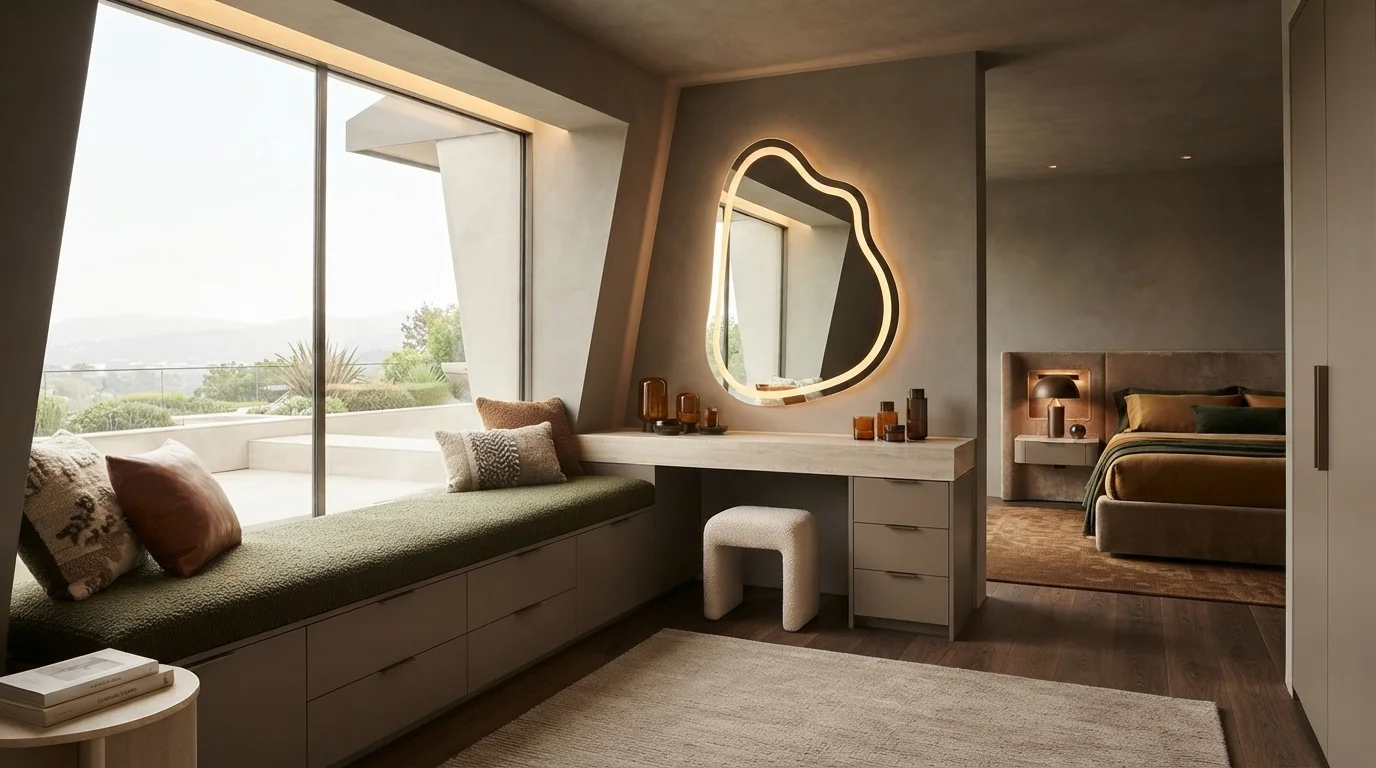
Custom-Made Furniture For Modern Bedroom
Size and Proportion: When Standard Furniture Does Not Fit
One of the clearest reasons to consider custom furniture is simple scale: the room does not fit standard furniture particularly well.
This is common in contemporary luxury homes, large villas, and open-plan residences with high ceilings, expansive glazing, and generous floor areas. Standard sofas and dining tables are often designed around average room dimensions. In a large residential interior, they can look unexpectedly small or leave awkward areas around them.
This is also why a piece that looks generously sized in a retail showroom can feel surprisingly small in a large home. A sectional sofa or dining table that feels substantial in a compact display setting may look visually lost when placed in a much larger open-concept living space.
Imagine a large living room with a double-height ceiling and floor-to-ceiling windows. A standard three-seat sofa may be perfectly comfortable, but visually it can disappear inside the room. A larger sectional or a custom sofa designed to suit the room’s proportions can create a stronger sense of balance.
The same issue can appear in dining rooms. A table that is technically large enough for your family may still feel too small for a wide dining area. Custom sizing can help the furniture relate better to the scale of the room, particularly when the dining area is part of a larger open-plan space.
Custom furniture can also solve less obvious problems. Structural columns, angled walls, step-downs, deep window bays, or unusually narrow areas can leave awkward gaps that standard pieces cannot use effectively. Custom configurations can be adjusted around these features rather than forcing the room to accommodate the furniture.
That does not mean every large room needs custom furniture. Ready-made pieces can work very well when the room has straightforward dimensions and the available sizes already suit the space.
There is no need to customize simply because a room is large. What matters is whether the furniture is properly scaled and fits the room naturally.
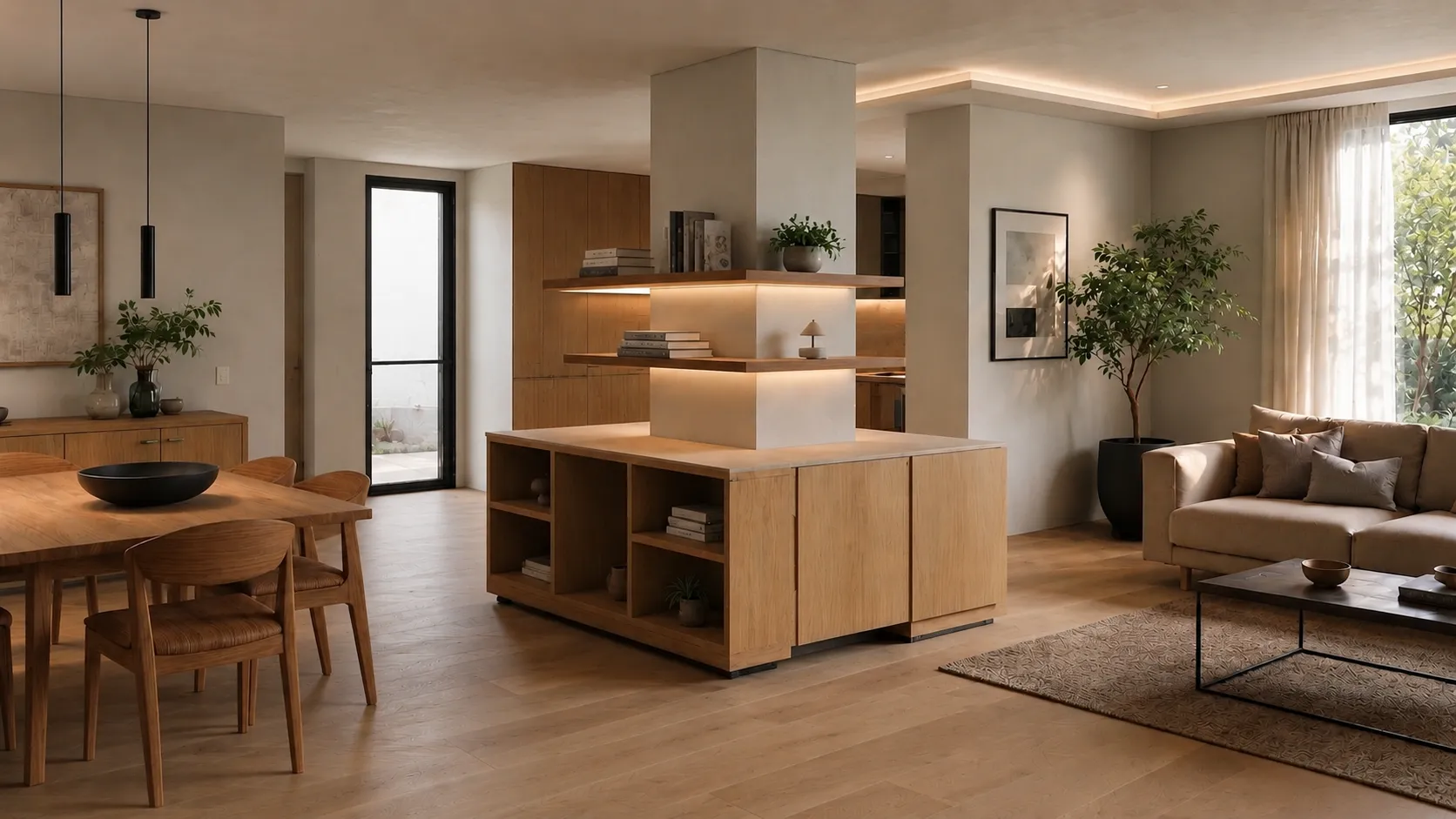
Custom Wooden Central Shelving Unit & Cabinetry Around Structural Column
Design, Materials, and Visual Cohesion
A second issue appears when you start combining furniture pieces.
You may have a sofa from one collection, a dining table from another, accent chairs from a third, and cabinetry designed separately. Each piece can look great on its own, but once everything comes together in the same home, subtle differences in finishes, materials, and proportions may create visual clashes that were not obvious when you chose each piece individually.
Wood tones are a common example. One walnut finish may have a reddish undertone, while another may be cooler or more muted. Metal finishes can also vary between polished, brushed, bronze, or black tones. Even leather and upholstery colors and textures can look different depending on the lighting and the surrounding materials.
This is where custom furniture can offer more control.
You may be able to select a specific wood veneer, match an upholstery tone, coordinate a metal finish with interior doors or lighting, or design a piece around an existing stone, flooring, or wall finish. Instead of choosing only from what a particular brand or collection offers, you have more flexibility to build furniture around the visual direction of the room.
But there is an important distinction: custom does not automatically mean more beautiful.
A well-designed ready-made collection can create a very cohesive room, especially when the pieces are designed to work together. The advantage of custom furniture is that it gives you more flexibility when the room already has a specific visual direction that standard pieces cannot easily match.
For a whole-home project, this can be especially useful when furniture needs to work alongside kitchen cabinetry, wardrobes, flooring, wall finishes, lighting, architectural millwork, and stone surfaces.
The goal is not to make every piece identical. It is to make the pieces feel like they belong in the same home.
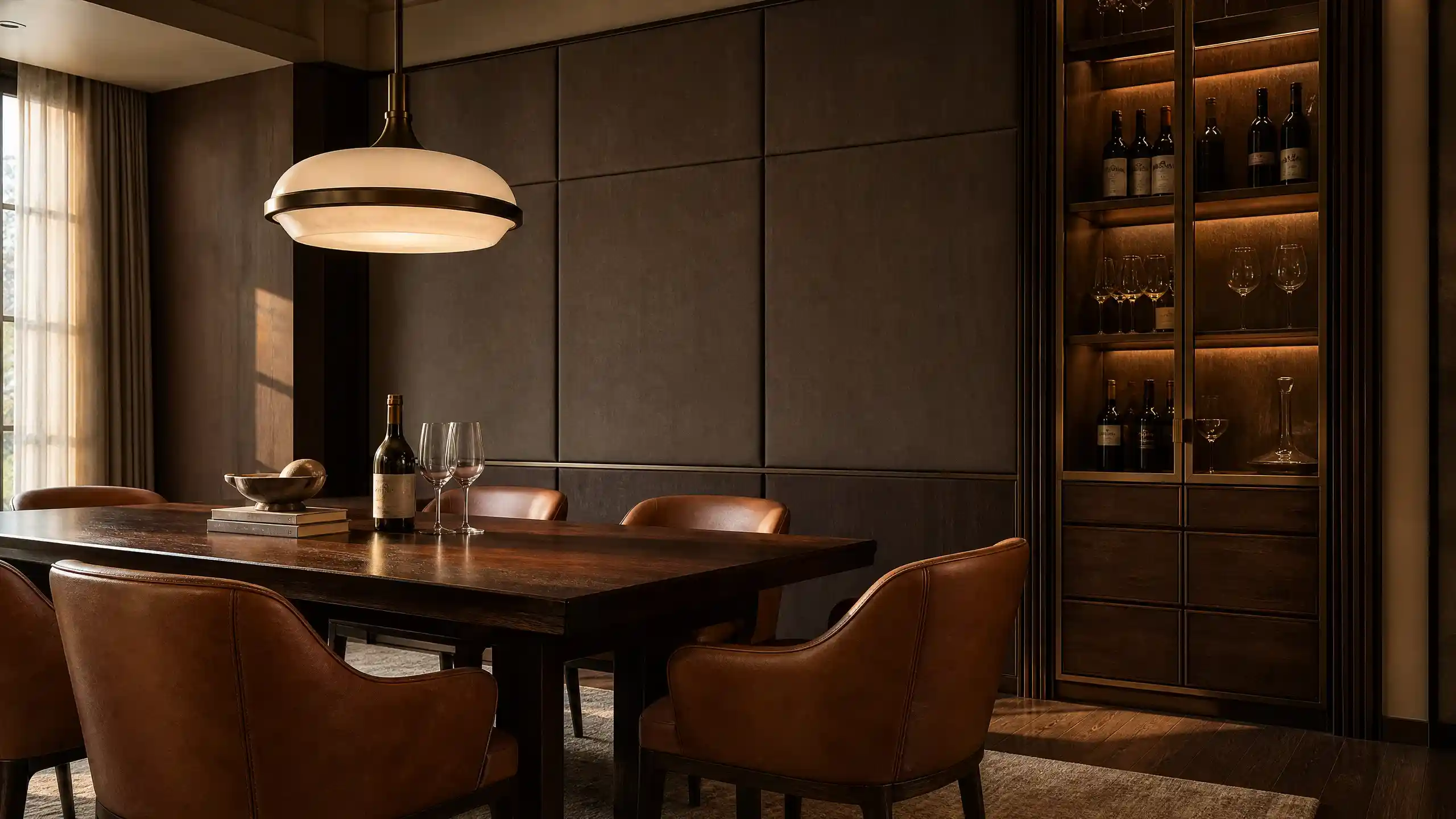
Contemporary Dining Room With Leather Chairs And Wine Cabinet
Quality and Craftsmanship: What Should You Actually Look At?
This is where furniture buying can become confusing, because labels such as “custom,” “luxury,” and “premium” do not tell you very much on their own.
A custom piece does not always mean higher quality, and a ready-made piece can be exceptionally well constructed. Quality comes down to materials, engineering, and execution—not simply how the furniture is sold.
For upholstered furniture, look at the frame construction, suspension system, cushioning, upholstery materials, stitching, and overall support. Depending on the design, quality construction may involve kiln-dried hardwood, structural plywood, reinforced internal frameworks, high-density foam, pocket springs, or layered cushioning designed to maintain comfort and support over time.
For casegoods such as cabinets and tables, pay attention to the substrate, veneer or solid wood specification, joinery, hardware, finish quality, and structural stability. Details such as well-executed joints, soft-close hardware, concealed hinges, and consistent veneer or finish application can make a meaningful difference in both performance and appearance.
Materials also need to suit the intended use.
A dining table in a busy family home needs to handle regular cleaning, meals, and everyday wear. A formal occasional table may have very different demands. The same applies to upholstery: a fabric selected for a rarely used lounge chair does not necessarily need the same performance as fabric used on a family room sofa.
This is why it is useful to compare furniture based on materials, construction, craftsmanship, and quality control, not simply on whether it is custom or ready-made.
If you are considering custom furniture, ask for clear material specifications, construction details, and finish samples before production. This gives you a better understanding of what you are actually paying for—and allows you to evaluate the piece beyond the label.
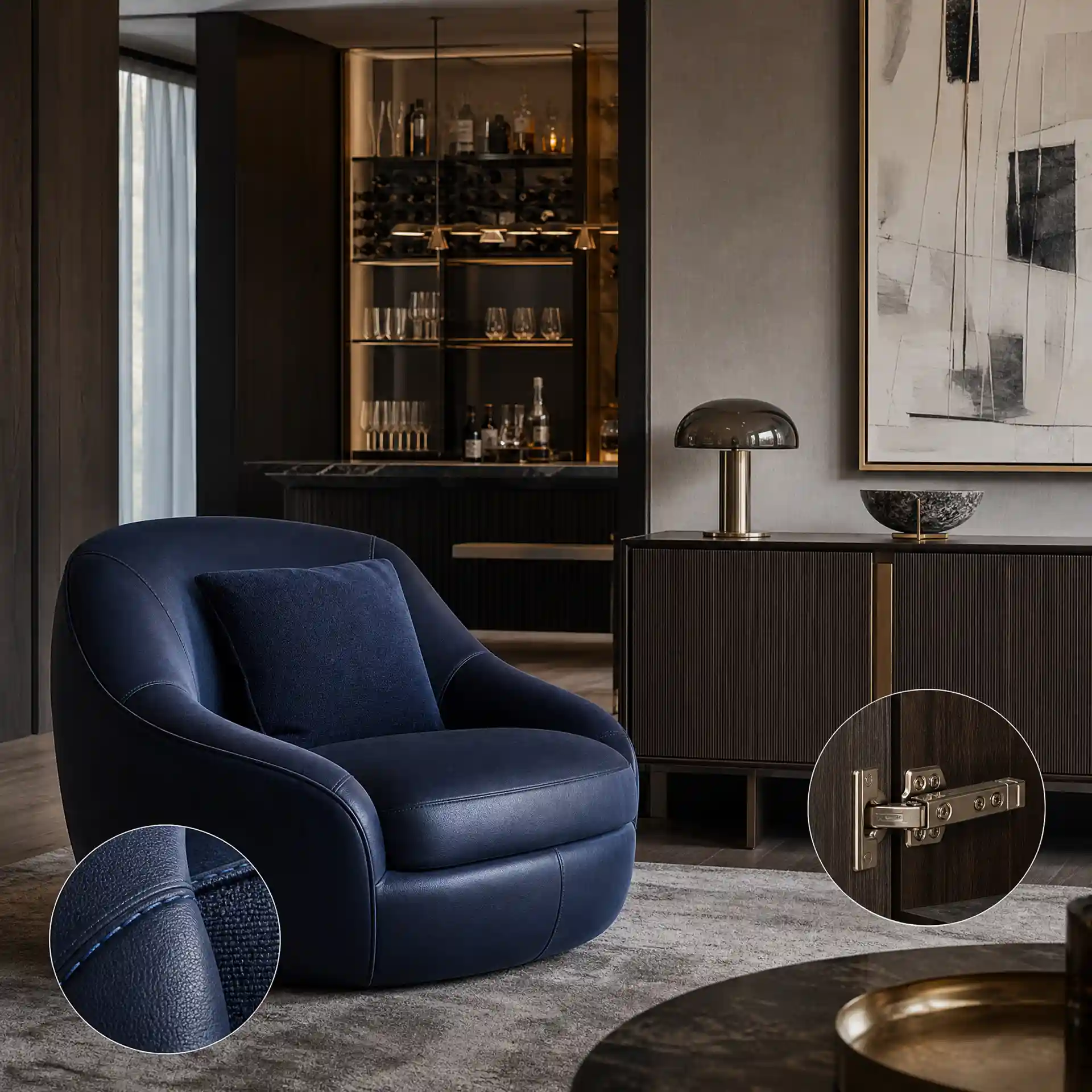
Deep Blue Lounge Chair And Wood Sideboard Details
Function and Comfort: What Is Worth Customizing?
Furniture is part of the visual design of a room, but you still have to live with it. And comfort is highly personal. What feels comfortable to one person may not work as well for another.
A sofa can look perfect in a rendering and become uncomfortable after an hour. A dining table can be beautiful but sit too high for the chairs you already own. A media console may look clean while offering nowhere to hide cables, game consoles, or other equipment.
Custom furniture gives you more room to fine-tune these details around how you actually use the space. Depending on the piece, you may be able to adjust details such as:
- Seat depth
- Seat height
- Backrest angle
- Cushion firmness
- Armrest proportions
- Table height
- Storage dimensions
- Hidden power and charging access
- Modular configurations
These details can make a noticeable difference in daily use. Custom pieces can also incorporate practical features such as integrated lighting channels, concealed power modules, or storage divisions designed around your specific equipment and routines.
For example, a homeowner who spends a lot of time reading or watching movies may prefer deeper lounge seating, a particular backrest angle, or softer cushioning. A household that regularly hosts dinner parties may put more emphasis on dining table dimensions, seating capacity, and the relationship between table height and chairs.
At the same time, there are many situations where ready-made furniture is perfectly sensible. Side tables, accent chairs, decorative ottomans, and occasional pieces are often easier to purchase ready-made, especially when standard sizes already work. They can also add character and flexibility without requiring a longer custom-order process.
You do not need custom manufacturing just because the home is high-end. The goal is to customize where it meaningfully improves comfort, function, or the way you use the space.
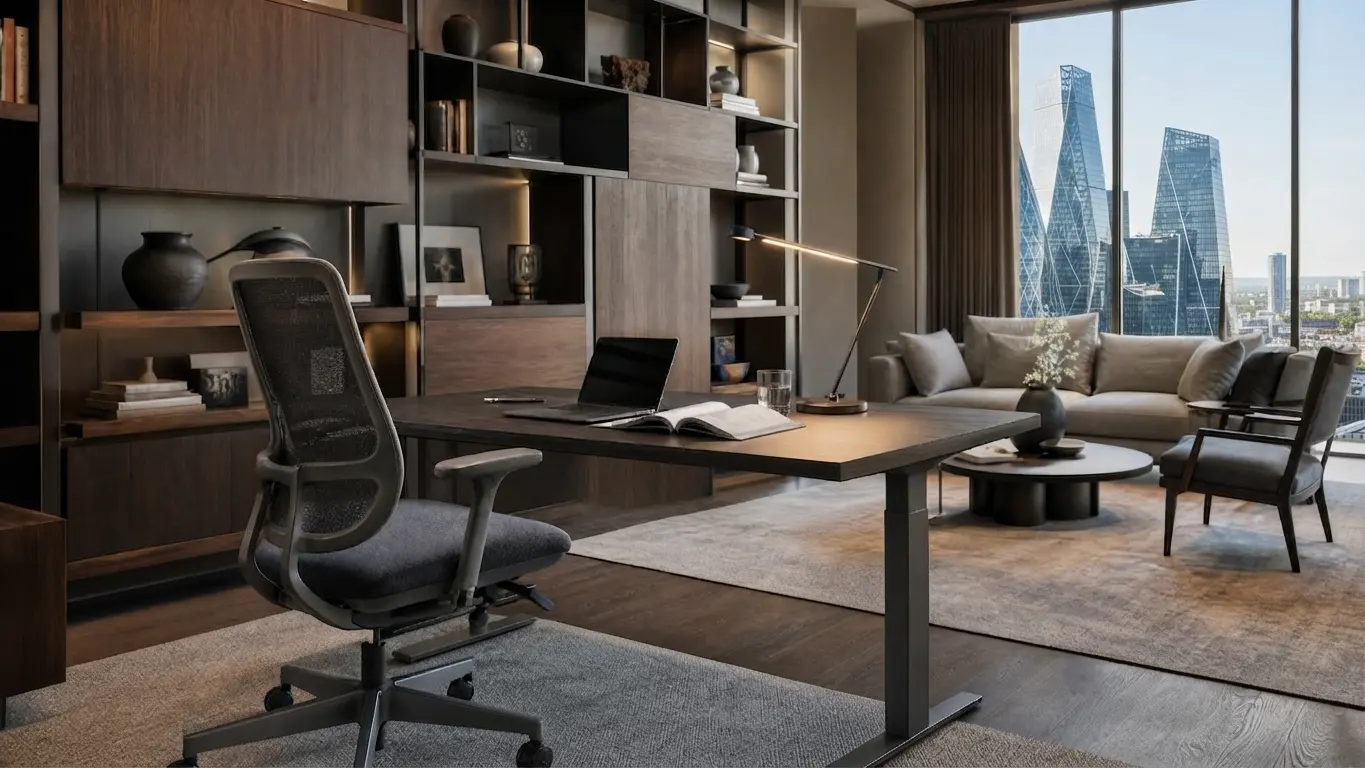
Home Office With Ergonomic Workstation & Modular Shelving
Do You Need Custom Furniture for the Whole Home?
Probably not. In fact, one of the most practical approaches is to decide which pieces actually benefit from customization and which do not. You do not have to choose a single approach for the entire home. A well-planned interior can combine custom and ready-made furniture based on the role each piece plays.
Custom furniture tends to make more sense when:
- The room has unusual dimensions
- You need very specific proportions
- You want a particular material or finish
- The piece needs to integrate with cabinetry or architecture
- You have specific comfort requirements
- You want a distinctive statement piece
Ready-made furniture can be a better fit when:
- You need something quickly
- Standard dimensions work well
- You want to see the finished product before buying
- The piece is relatively small or secondary
- You may want to replace it more easily later
For example, you might choose a custom sectional for a large living room, a custom dining table for an unusually wide dining area, or a built-in media console designed around the room’s architecture, while using ready-made accent chairs, side tables, or guest bedroom furniture where standard options already work well.
This kind of combination lets you put customization where it matters most while keeping other purchases flexible, practical, and easier to replace. You get the benefits of custom furniture without turning every purchase into a custom manufacturing project.
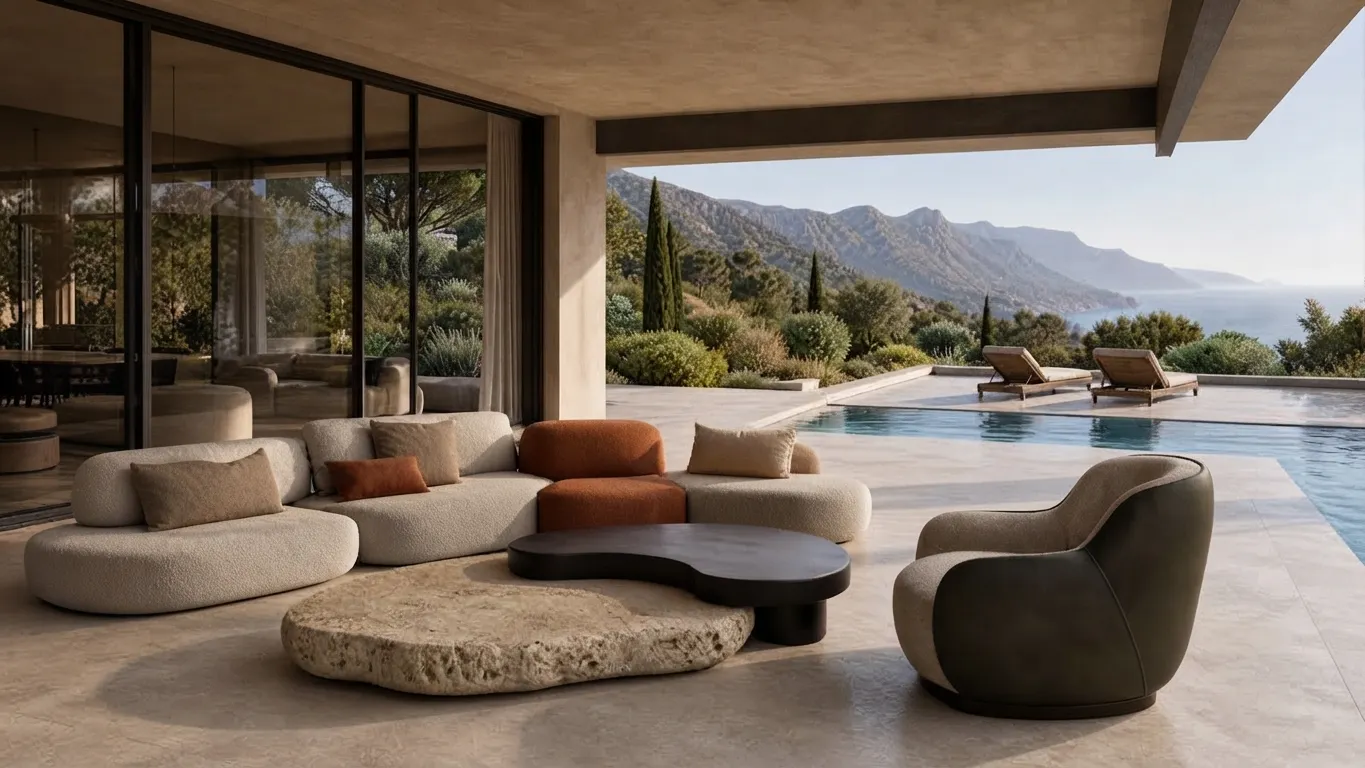
Luxury Outdoor Patio Furniture With Sun Loungers
Custom and Ready-Made Furniture: Finding the Right Balance
Custom and ready-made furniture can work beautifully together when the room has a clear visual direction. The key is not to make every piece match, but to create enough connections between them that the overall space feels considered and cohesive.
You might pair a custom dining table with ready-made dining chairs, or use a custom sofa with commercially available side tables and lighting. The pieces do not have to come from the same collection or brand. What matters is that they share a few intentional design connections.
Look for relationships in:
- Scale and proportion
- Color and palette
- Wood tones
- Metal finishes
- Upholstery
- Shape and silhouette
For instance, a custom dark wood dining table with unique proportions can work beautifully with ready-made upholstered chairs. The chairs do not need to match the table exactly—they simply need to relate through compatible scale, complementary finishes, or a cohesive color palette.
The same principle applies throughout the room. A few intentional custom pieces can act as visual anchors, while ready-made furniture and accessories add flexibility and individuality around them.
In fact, a room where everything is perfectly matched can sometimes feel overly staged. A thoughtful mix of custom and ready-made pieces can create a more collected and personal look. In other words, what matters is not perfect uniformity, but visual balance.
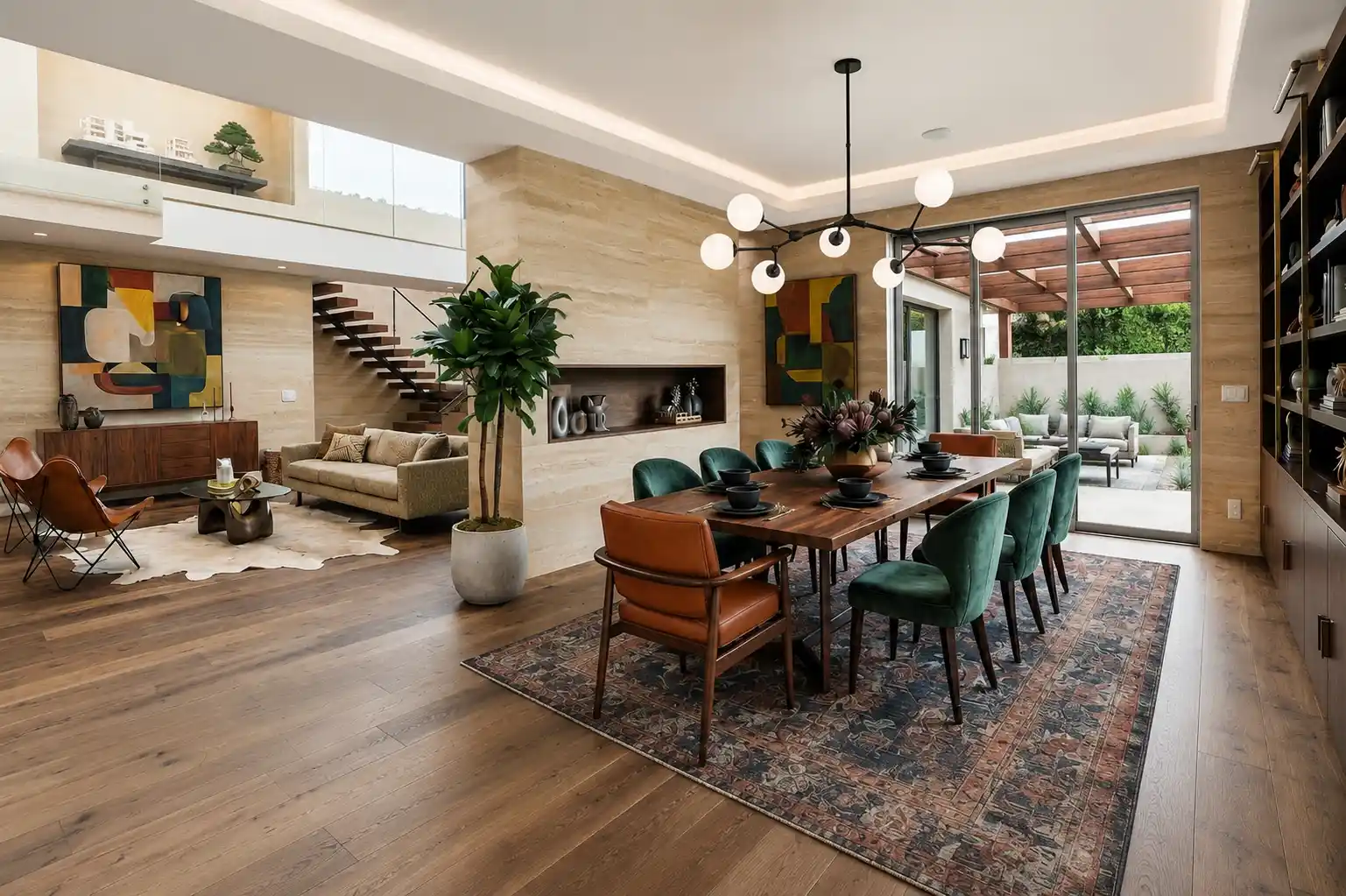
Modern Furniture For Open-Plan Living Room And Dining Space
How Furniture Fits Into a Whole-House Design
Furniture rarely exists on its own. In a complete home, each piece sits alongside—and interacts with—almost everything else.
A living room sofa relates to the flooring beneath it, the lighting above it, the cabinetry nearby, the wall finishes behind it, and the doors or windows surrounding the room. A dining table may need to work with the kitchen finishes, pendant lighting, and adjacent flooring.
This becomes especially important in large residential projects, where furniture is part of a broader interior rather than an isolated purchase. Coordinating furniture with architectural lighting, interior doors, kitchen cabinetry, stone surfaces, wall finishes, and other major elements can help prevent visual inconsistencies and practical surprises later.
This does not mean every element needs to match. It means furniture should be considered alongside the surrounding architecture and finishes from the beginning, so that the different parts of the home support one another.
The most effective furniture plan is not necessarily one in which every item is custom. It is one where each piece has a clear role within the larger design.
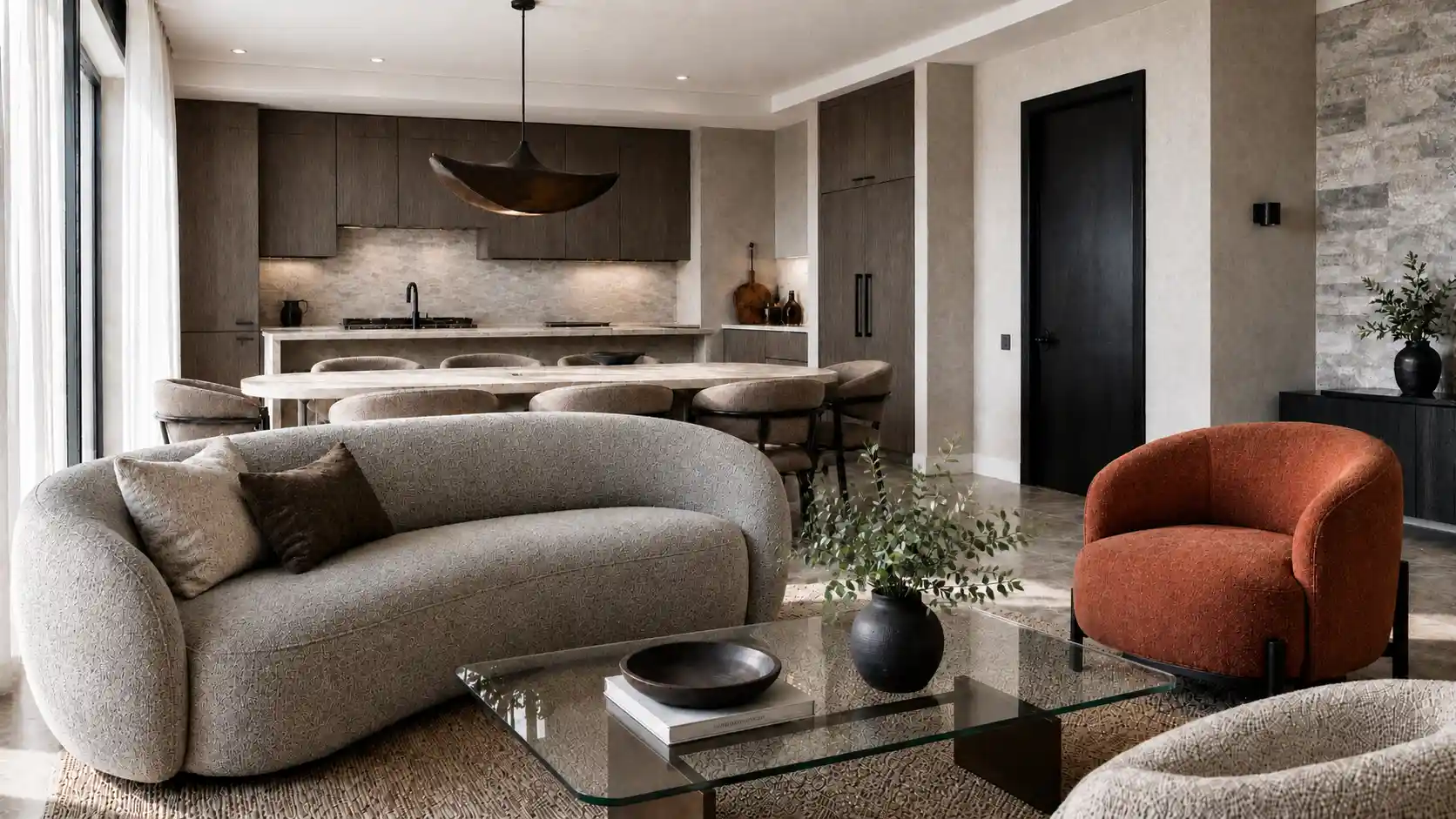
Modern Grey Sofa, Textured Orange Armchair & Glass Coffee Table in Open-Plan Living Room
What to Confirm Before Ordering Custom Furniture
Once you decide that a piece should be custom, take a little extra time before production begins. Good custom furniture starts with a clear specification—and careful decisions before manufacturing begins.
Before signing off on production, make sure you have confirmed:
- Dimensions and Clearance: Final furniture dimensions and the clearance paths through doors, elevators, stairways, and corridors.
- Materials and Finishes: Precise material specifications, wood species, veneer selections, finishes, and upholstery.
- Samples: Physical finish and upholstery samples, especially for materials where color or texture can vary under different lighting conditions.
- Construction and Hardware: Key construction details, hardware specifications, and any functional requirements.
- Drawings and Layouts: Approved shop drawings, 3D renderings, or spatial layouts to confirm proportions and placement before manufacturing.
- Lead Time and Delivery: Production schedule, packaging, delivery, and installation details, including what is included in the quotation.
If possible, schedule a showroom tour to experience the materials and finishes in person before making your final selections. This can give you a clearer sense of how they will look and feel in the finished space.
The more clearly these details are confirmed before production, the fewer surprises you are likely to encounter later.
Why Choose George Furniture?
Navigating custom specifications, retail sourcing, material matching, and international logistics can quickly become overwhelming for a busy homeowner or design team.
Whether you are furnishing a single room or an entire home, the challenge is often bigger than finding a beautiful sofa or dining table. The furniture needs to suit your space and, when part of a larger project, work with the cabinetry, lighting, flooring, stone, doors, and other elements around it.
George Group brings these residential categories together through its integrated approach to whole-house customization. Besides furniture, its residential offering includes kitchen cabinetry and wardrobes, lighting, bathroom solutions, windows and doors, flooring, marble and stone, ceramic tiles, home appliances, and additional solutions based on your project’s needs.
That gives you the option to consider furniture as part of the wider home rather than sourcing every category separately.
George Group also supports product coordination, specification confirmation, quality inspection, packaging, and international delivery. For overseas homeowners and design professionals, this can reduce some of the communication and logistics involved in managing multiple suppliers.
The George Group showroom in Foshan brings these categories together in one place, where you can inspect material finishes, test sliding door and hardware mechanisms, and explore full-scale interior settings throughout our new 40,000-square-meter showroom. Schedule a Showroom Visit to experience the collections and materials in person.
George Furniture – Luxury Furniture Supplier in China
The Final Verdict
There is no universal winner in the custom vs. ready-made furniture debate.
Ready-made furniture can be the smarter choice when you value speed, convenience, and standard dimensions. Custom furniture becomes the better fit when your space, design, comfort, or material requirements call for greater flexibility.
For many homeowners, the best solution is a combination of both—custom pieces where they make a real difference, and ready-made furniture where they already do the job well.
Planning a new home or complete interior project? Share your requirements with George Group to explore furniture options that fit your space, style, and needs. We will review your floor plans and discuss tailored furnishing solutions for your project.
Frequently Asked Questions
Is custom furniture always more expensive than ready-made furniture?
Custom furniture often costs more because it involves tailored design, materials, finishes, and production rather than standardized manufacturing. However, the price difference depends on the piece, materials, specifications, and level of customization. For key pieces where fit, comfort, or specific design requirements matter, the additional investment may be worthwhile.
Which types of furniture are most worth customizing?
Custom furniture is often most valuable for pieces where dimensions, comfort, or design integration matter most. Common examples include sofas and sectionals, dining tables, media units, built-ins, and furniture designed around unusual room layouts or architectural features.
How long does custom luxury furniture usually take to manufacture?
Lead times vary by piece, materials, complexity, production schedule, and shipping arrangements. A custom project may involve design confirmation, sample approval, production, quality inspection, and delivery, so it generally requires more planning than buying ready-made furniture.