Slate-Look Floor Base: Slate Texture Matte Porcelain Tiles
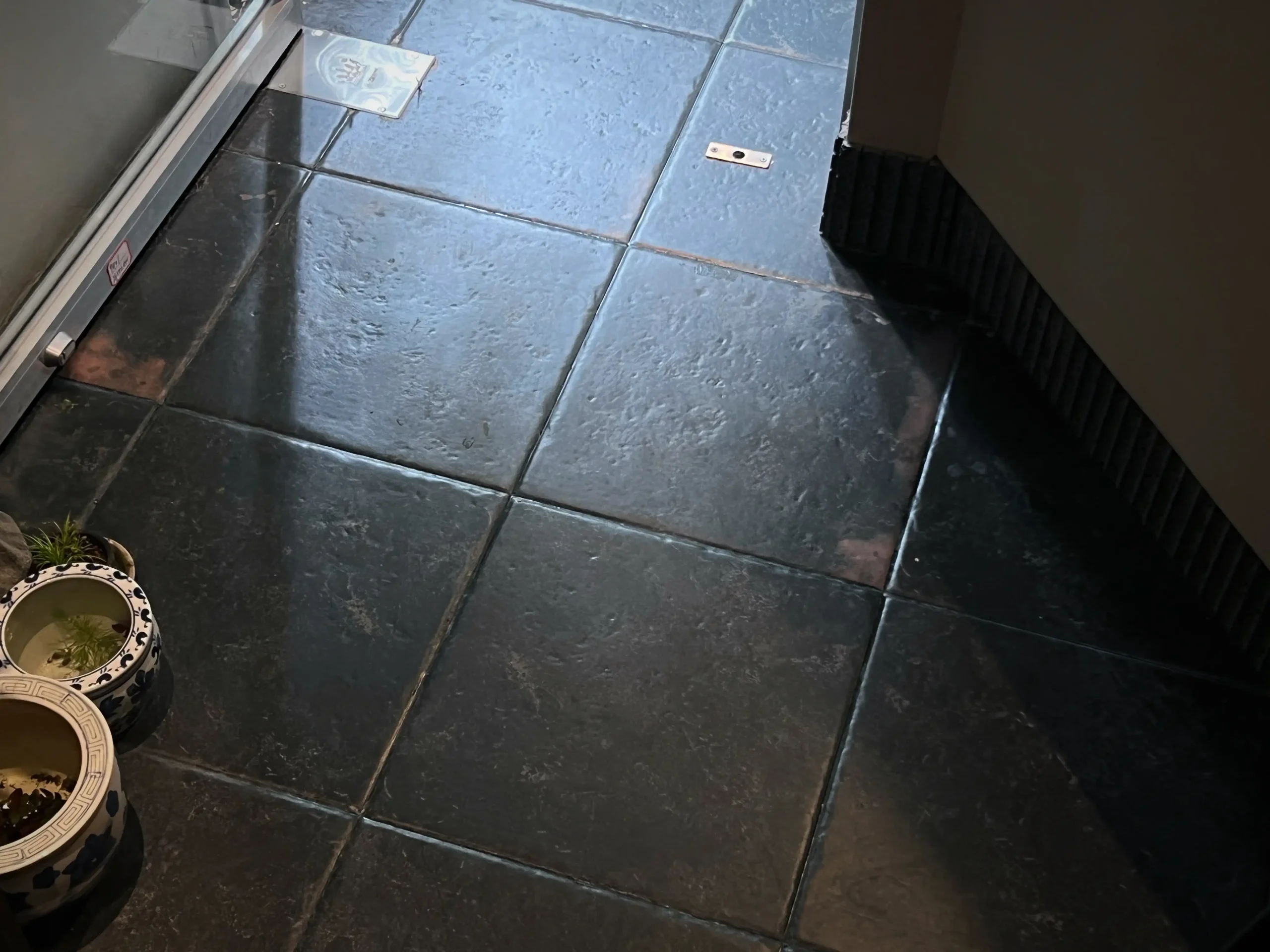
The flooring uses slate-look matte porcelain tiles with a subtle, weathered stone surface and soft natural variations in dark grey and charcoal tones.
The low-sheen matte finish reduces harsh reflections from overhead lights and glass doors, creating a softer, more welcoming entryway. It also allows the subtle stone texture and tonal variations to remain visible, adding depth and character to the floor without overwhelming the space.
For a tea house, where a calm and comfortable atmosphere is part of the experience, this understated finish works particularly well. The combination of dark tones, natural-looking texture, and reduced glare creates a grounded visual foundation while allowing lighting and surrounding interior elements to stand out naturally.
High-density porcelain floor tiles like these are also well suited to busy commercial areas, offering durability for heavy foot traffic while the textured surface provides added grip around entryways and tea stations.
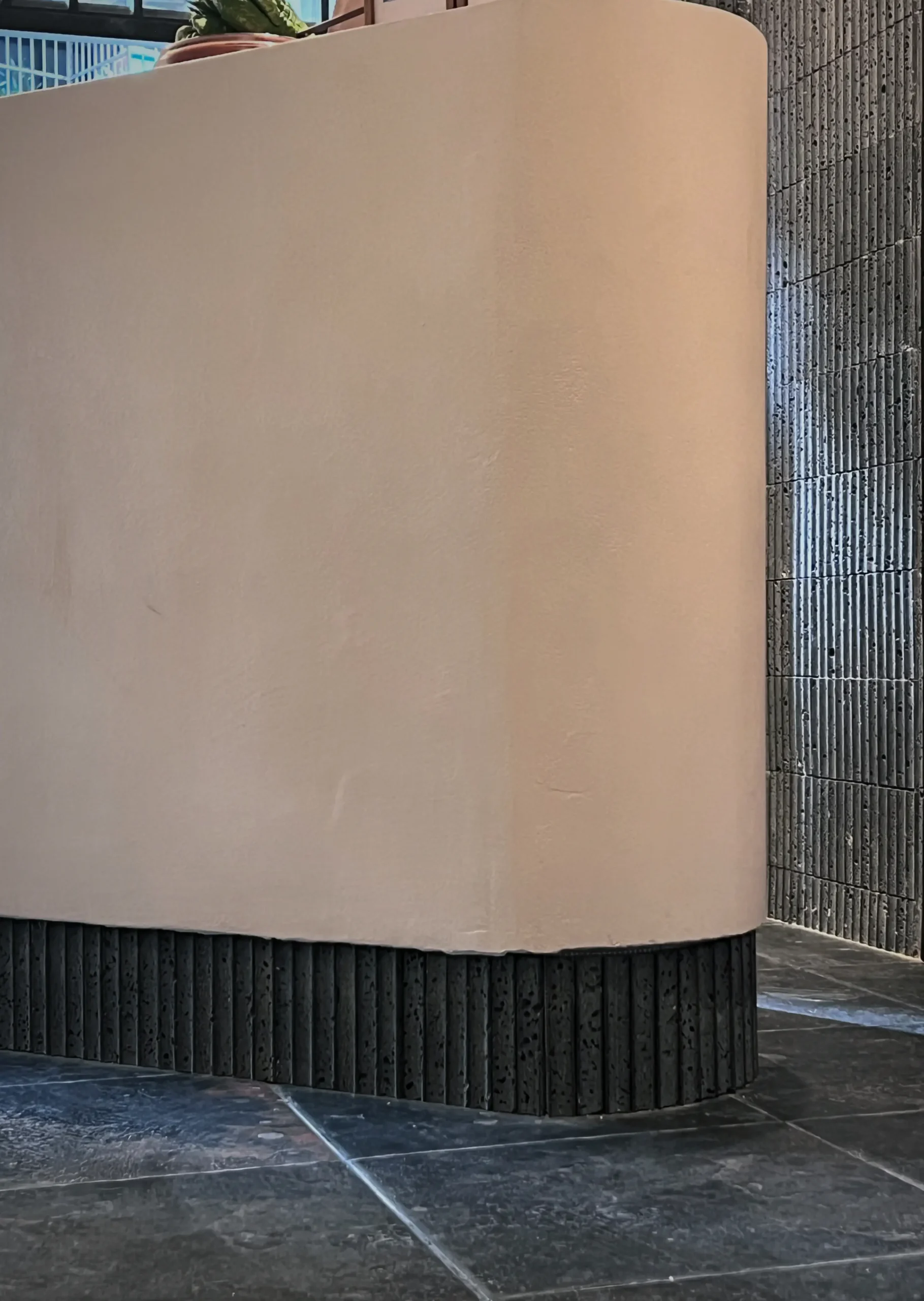
Seamless Wall-to-Floor Trim: Grooved Charcoal Skirting Tiles
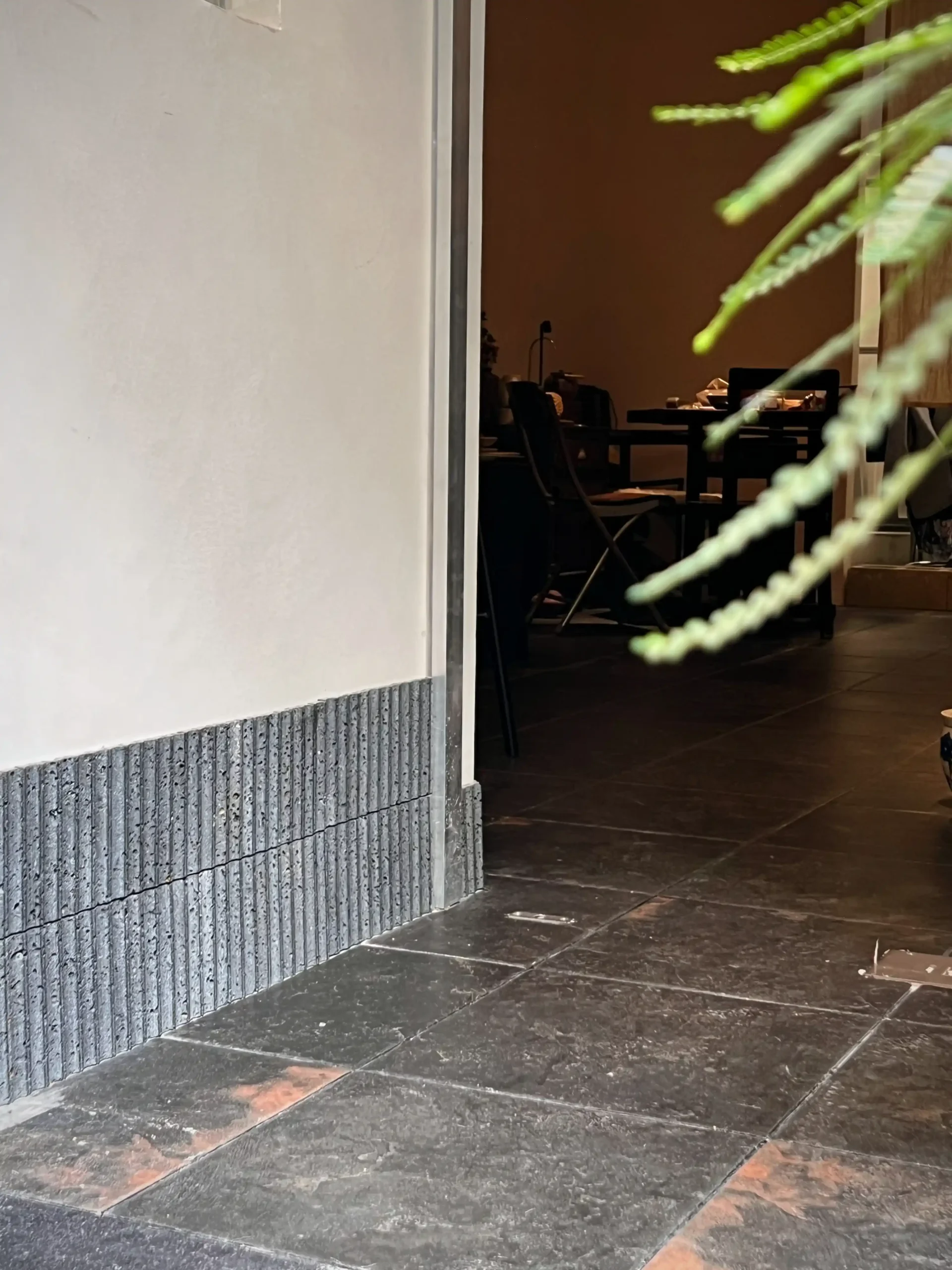
To create a clean transition from smooth painted walls or curved counters to the dark tiled floor, this space uses vertical grooved charcoal skirting tiles.
Instead of basic flat trim, these dark baseboard tiles feature a porous, volcanic-stone texture with deep vertical fluting that wraps smoothly around both straight and curved walls. The textured finish adds another layer of visual interest while keeping the wall, floor, and surrounding tile surfaces connected through a consistent material language.
Skirting may be a small detail, but it can have a noticeable impact on the overall finish of a space. Here, the matching charcoal tone helps create a continuous, cohesive look, while the raised base protects lower wall areas from wet mops and everyday shoe scuffs.
For commercial interiors such as tea houses, restaurants, and lounges, this combination of practical protection and refined detailing helps the entire space feel more considered and complete.
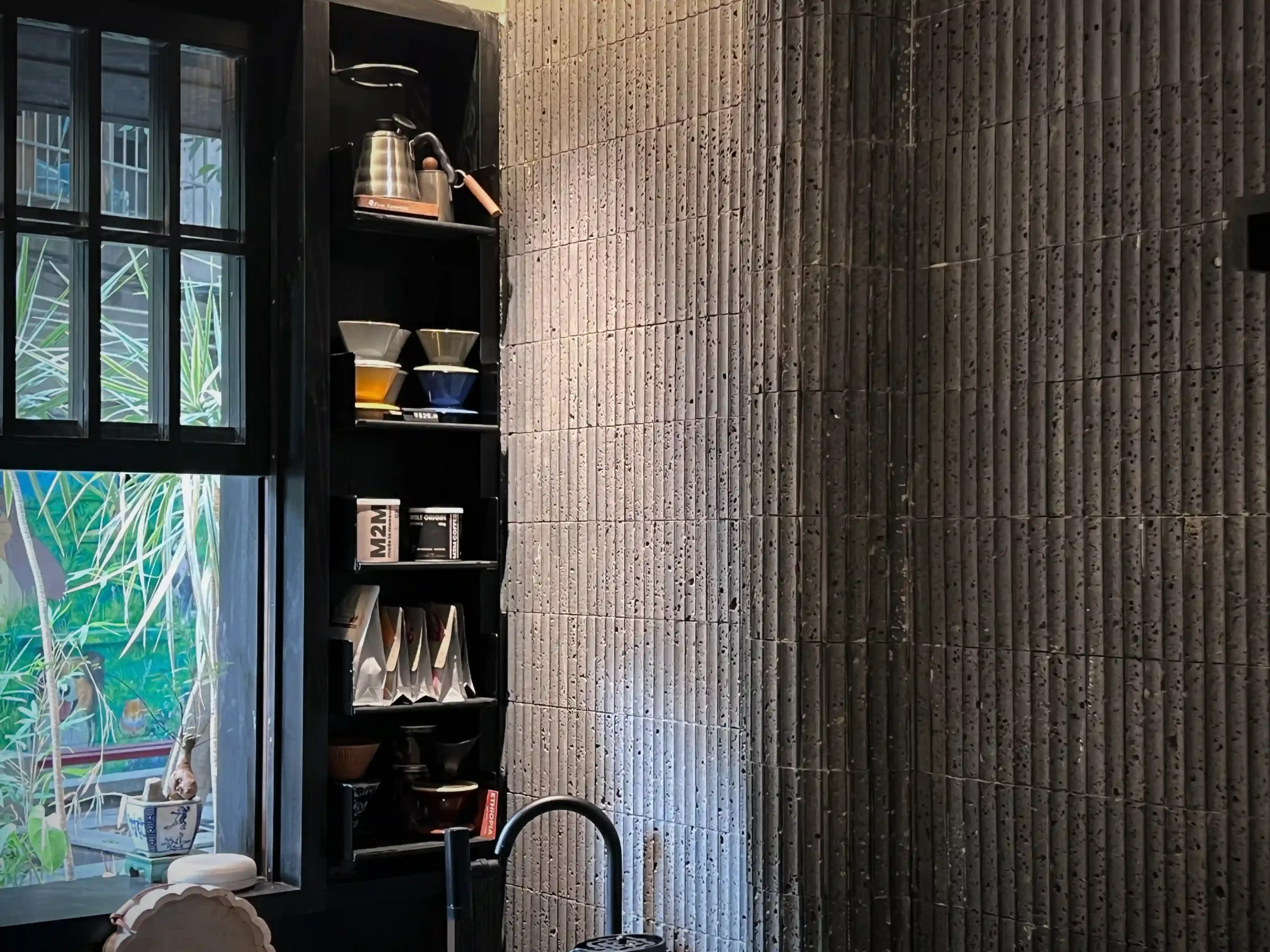
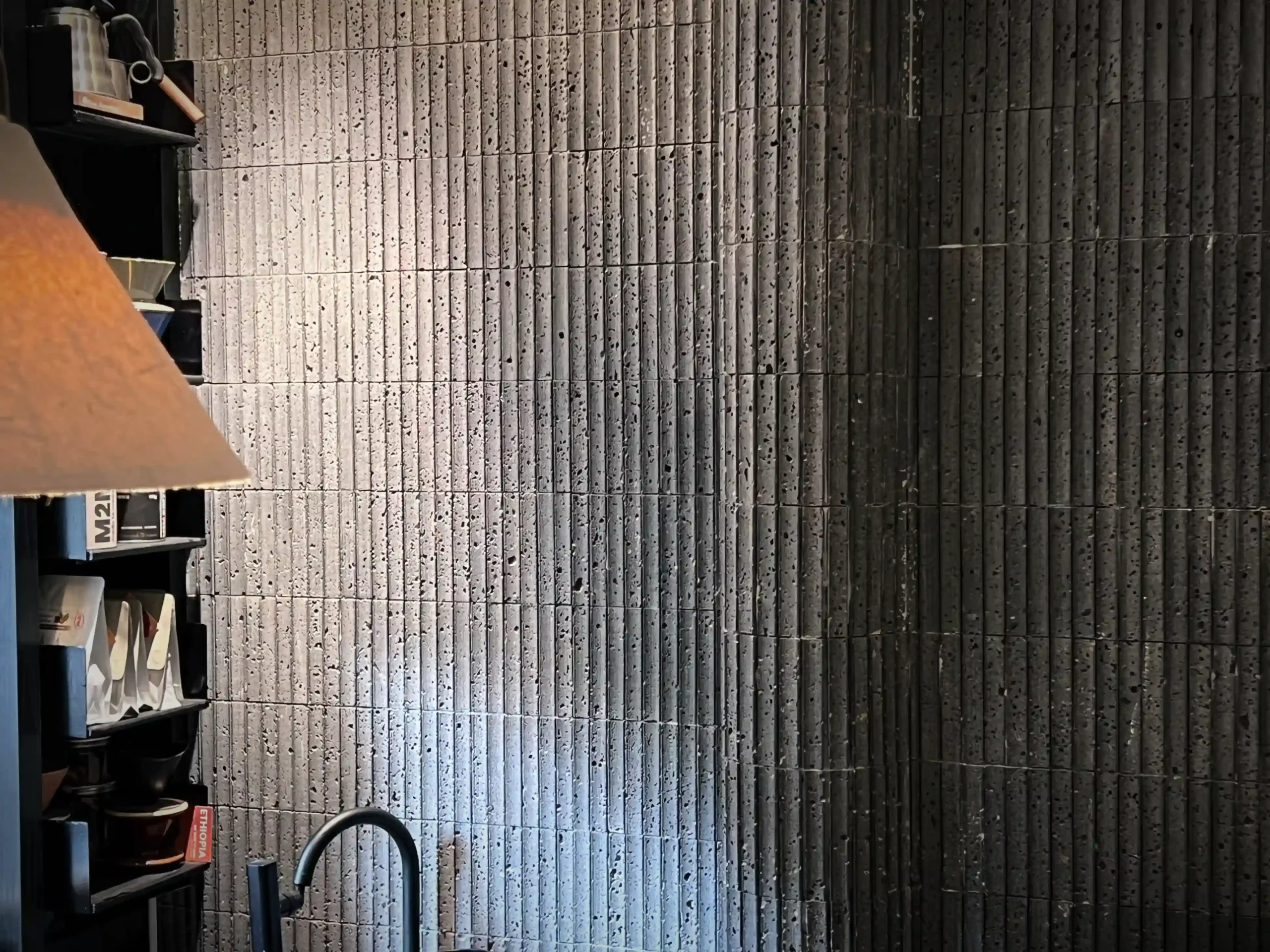
Architectural Feature Walls: Porous Volcanic-Style Charcoal Black Wall Tiles
For the main accent walls behind shelves and tea bars, narrow fluted wall tiles are stacked vertically in a clean grid.
These porous, lava-stone-style porcelain strips feature natural pit details and deep vertical grooves. Under warm spotlights (around 2700K to 3000K), light brushes down the textured channels and diffuse across the porous surface. This gentle light dispersion softens the deep base into a rich dark graphite tone, casting soft shadows that give flat walls a tactile, architectural feel.
Rather than looking like a heavy, jet-black block, the charcoal matte surface diffuses ambient light naturally, keeping the space grounded without feeling overly dark. This subtle grey-to-black gradient creates a calm, sophisticated backdrop that complements the understated character of modern Chinese interiors.
Beyond decoration, these charcoal black wall tiles help define key focal points within a commercial space. Used behind shelving or tea bars, the vertical texture quietly draws attention to selected areas without relying on heavy decorative elements.
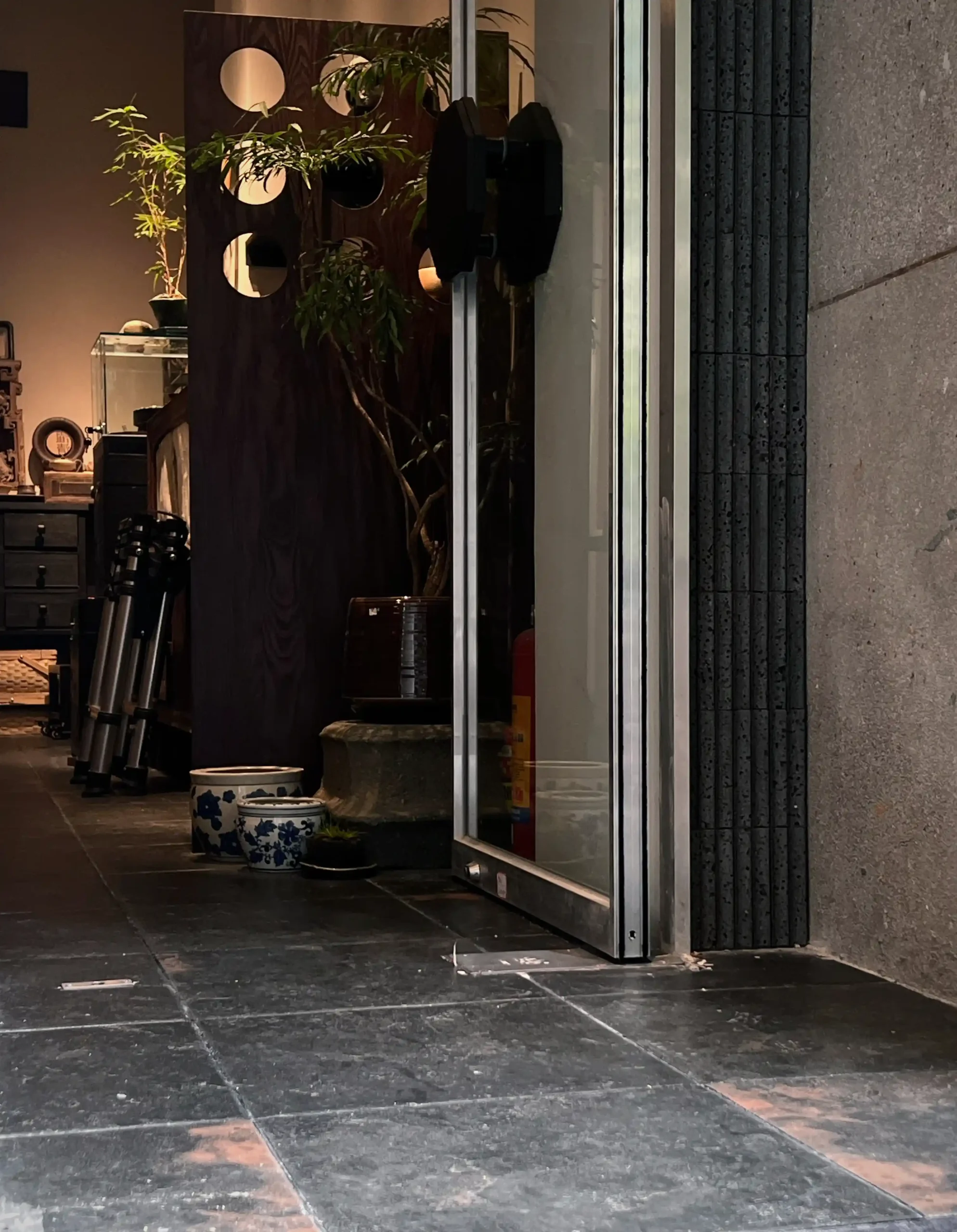
Entryway Continuity: Textured Black Wall Base and Floor Pairing
This entryway view highlights how the fluted black base tiles align directly with the dark slate-texture floor tiles, creating a natural visual connection between the wall base and flooring.
The matching dark tones and textured surfaces help bridge the transition from outdoor walkways to the interior, while the vertical fluting adds subtle architectural detail along the lower edge of the smooth micro-cement walls. Rather than treating the floor and wall base as separate elements, the coordinated tile finishes create a more cohesive and considered entrance.
For a modern Chinese tea house, this darker material palette also provides a practical foundation for a high-traffic entryway. The textured black tile helps visually conceal everyday dirt and splashes near floor level while maintaining the clean, understated character of the entrance.
This simple pairing demonstrates how coordinating different tile applications can create continuity throughout a space without adding unnecessary decoration.
Compact Area Layout: Small Square Matte Porcelain Floor Tiles
In tighter floor layouts and transition zones, small square matte black porcelain floor tiles are laid in a clean, straight grid to create a structured and cohesive surface.
Their softly pillowed edges and subtle surface indentations add a handcrafted, stone-like character, echoing the look of traditional hand-cut slate pavers. The smaller format is particularly effective in compact areas, where the tighter grid introduces a more detailed scale and helps visually define corners, thresholds, and transition zones.
Rather than simply repeating the larger slate-look flooring, these small-format tiles introduce a subtle change in rhythm while keeping the same dark, understated material palette. This variation adds detail to the floor plan without disrupting the overall design language of the tea house.
Final Thoughts: Building a Cohesive Space Through Tile Selection
A well-designed tile scheme is not necessarily about using one tile everywhere. It is about choosing different formats, textures, and finishes that work together as part of the same visual language.
In this tea house, slate-look floor tiles establish the foundation, fluted wall tiles add architectural character, and smaller formats bring variation to tighter areas and transitions. Even the skirting becomes part of the design rather than an afterthought.
The result is a space where the materials feel connected without looking repetitive. This approach can work beyond tea houses, too—from boutique restaurants and hospitality spaces to private living areas, reading rooms, and home tea spaces.
Whether you’re planning a commercial interior or looking for ideas for your own home, the project offers a simple takeaway: the right combination of tile texture, scale, and finish can give even understated materials a strong sense of character.