Have you ever walked through a beautiful, high-end villa and felt like something was just… off?
The living room looks stunning on its own. The kitchen has an impressive marble island. The master suite feels like a boutique hotel. But as you move from one space to the next, the home can start to feel like a collection of separate rooms rather than one thoughtfully designed residence.
The challenge becomes even greater in a large villa with multiple floors, generous ceiling heights, and a wide range of spaces. It isn’t simply about finding beautiful furniture or choosing the latest interior trend. It’s about creating a clear design language that connects the architecture, materials, furniture, lighting, and the way you live in the space.
That doesn’t mean every room needs to look the same. Modern minimalism, contemporary European, modern classic, Mediterranean, and other luxury villa styles can all create distinctive results. The key is knowing how to choose and combine the right elements so the overall home feels cohesive, personal, and comfortable.
In this guide, we’ll explore some of the most popular luxury villa design styles and the interior trends shaping contemporary residential spaces—from material palettes and lighting to furniture, color, and spatial planning. More importantly, we’ll look at how to bring these ideas together to create a villa that feels considered from the entrance to the private spaces.
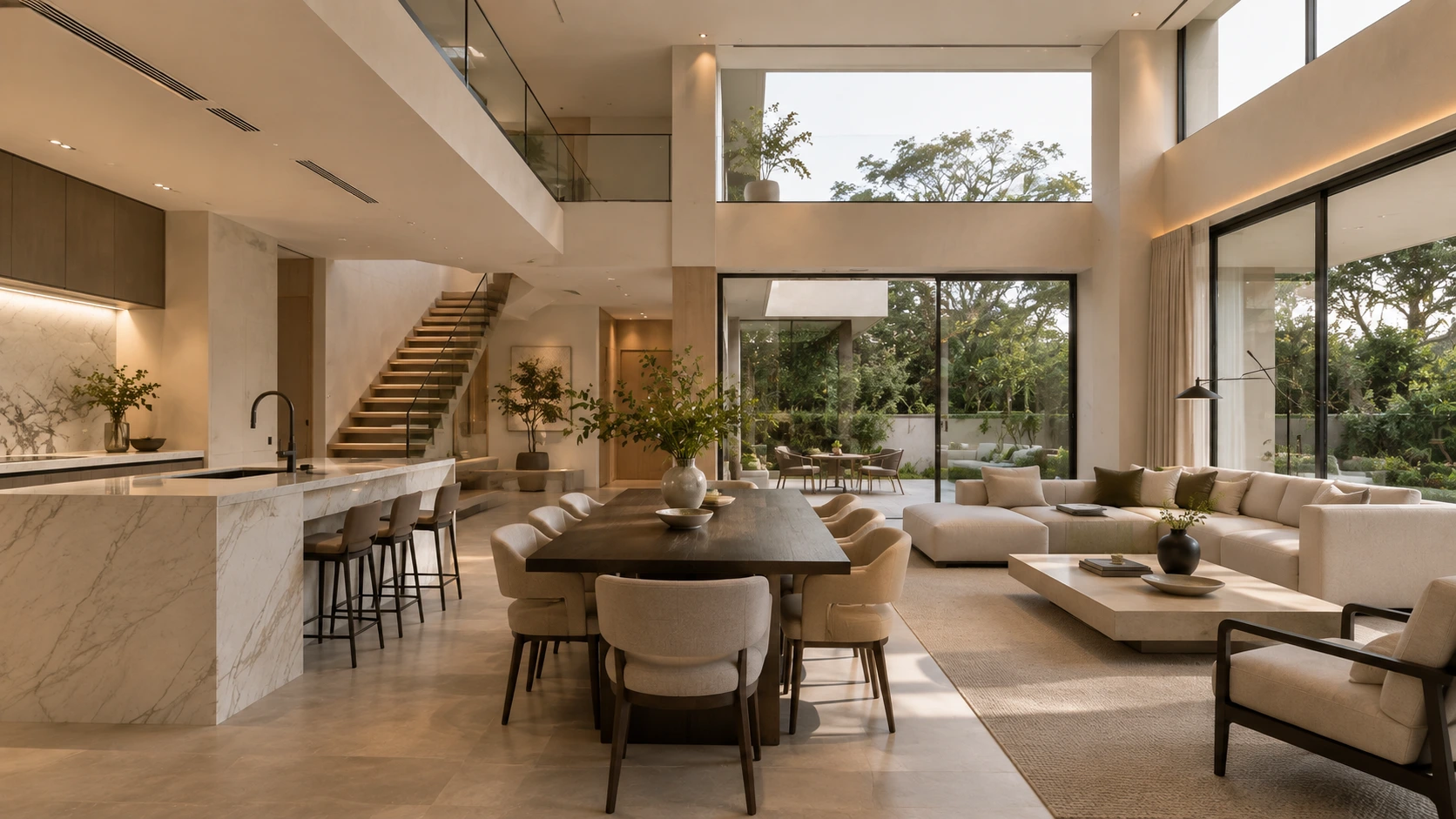
Modern Luxury Two-story Open-concept Living Room Design
5 Luxury Villa Design Styles Homeowners Love
There is no single style that defines a luxury villa. Some homeowners prefer clean architectural lines and minimal decoration, while others want warmer interiors, more traditional detailing, or a relaxed Mediterranean feel.
With so many inspirational images and design ideas available today, it can be easy to lose sight of what actually works for your home. The right style often depends on the architecture of the property, its surroundings, and, most importantly, how you want to live in the space. Instead of trying to recreate a look from an inspiration board, focus on choosing a design direction that feels right for both the home and the people who live in it.
The following styles represent some of the most relevant directions for contemporary luxury villas, each with its own character, materials, and approach to everyday living.
Modern Minimalist: Architecture First
The Vibe: Calm, refined, and uncluttered.
Signature Details: Flush-to-wall doors, shadow gaps, integrated storage, and clean architectural lines.
Modern minimalist villas focus on clean lines, simple forms, and a restrained visual palette. Instead of relying on heavy decoration, the design allows architectural proportions, natural light, and carefully selected materials to create visual interest.
Large windows, open layouts, integrated cabinetry, flush doors, and understated furniture are often used to keep the interior feeling spacious and uncluttered. Warm neutral tones, honed stone, subtle wood textures, and brushed metal details can also prevent a minimalist home from feeling too cold or stark. These subtle variations in texture and finish add depth without making the space feel overly decorated.
This style works particularly well for homeowners who prefer a calm, organized environment where the architecture remains the main focus.
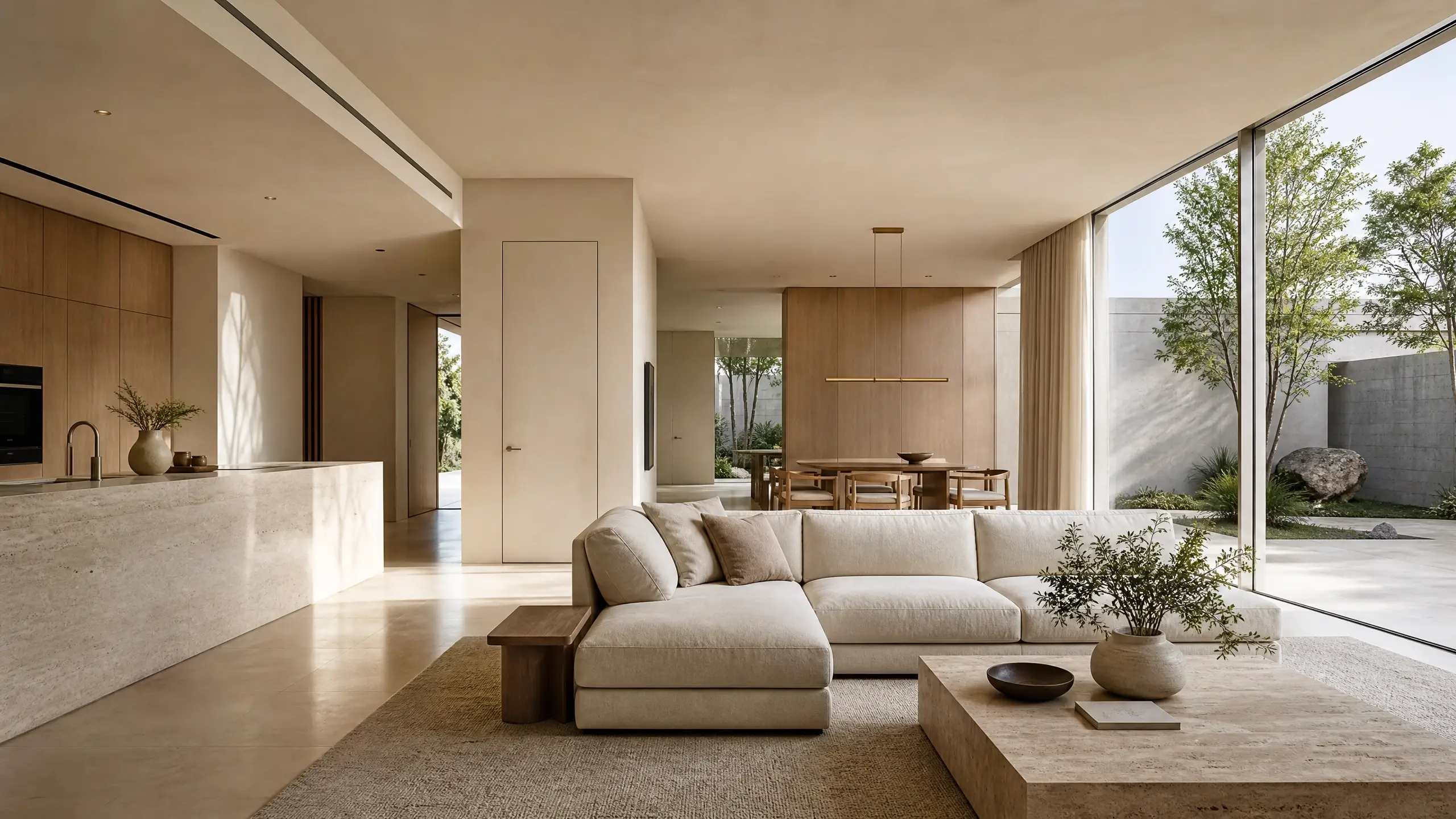
Modern Minimalist Villa Interior Design
Contemporary Luxury: Elegance in the Details
The Vibe: Sophisticated, polished, and effortlessly comfortable.
Key Finishes: Natural stone, marble, wood, textured fabrics, refined metal accents, and carefully selected architectural finishes.
Contemporary luxury villa design is defined less by a particular regional style and more by the way architecture, materials, furniture, and detailing are carefully brought together. Clean architectural forms provide the foundation, while thoughtful proportions, layered textures, and refined finishes give the interior a sense of depth and character.
The material palette can range from light and understated to darker and more dramatic, depending on the architecture and mood of the home. Natural stone, marble, wood, metal, and textured fabrics can be combined in different ways to create contrast without overwhelming the space. European influences can also be introduced through furniture and detailing, from the refined character of French interiors to the understated sophistication often associated with contemporary Italian design.
Rather than relying on excessive decoration, this style creates a sense of luxury through well-proportioned cabinetry, sculptural lighting, distinctive furniture, and carefully considered material combinations. It works particularly well in larger villas where generous proportions and open spaces give these architectural and interior details room to stand out.
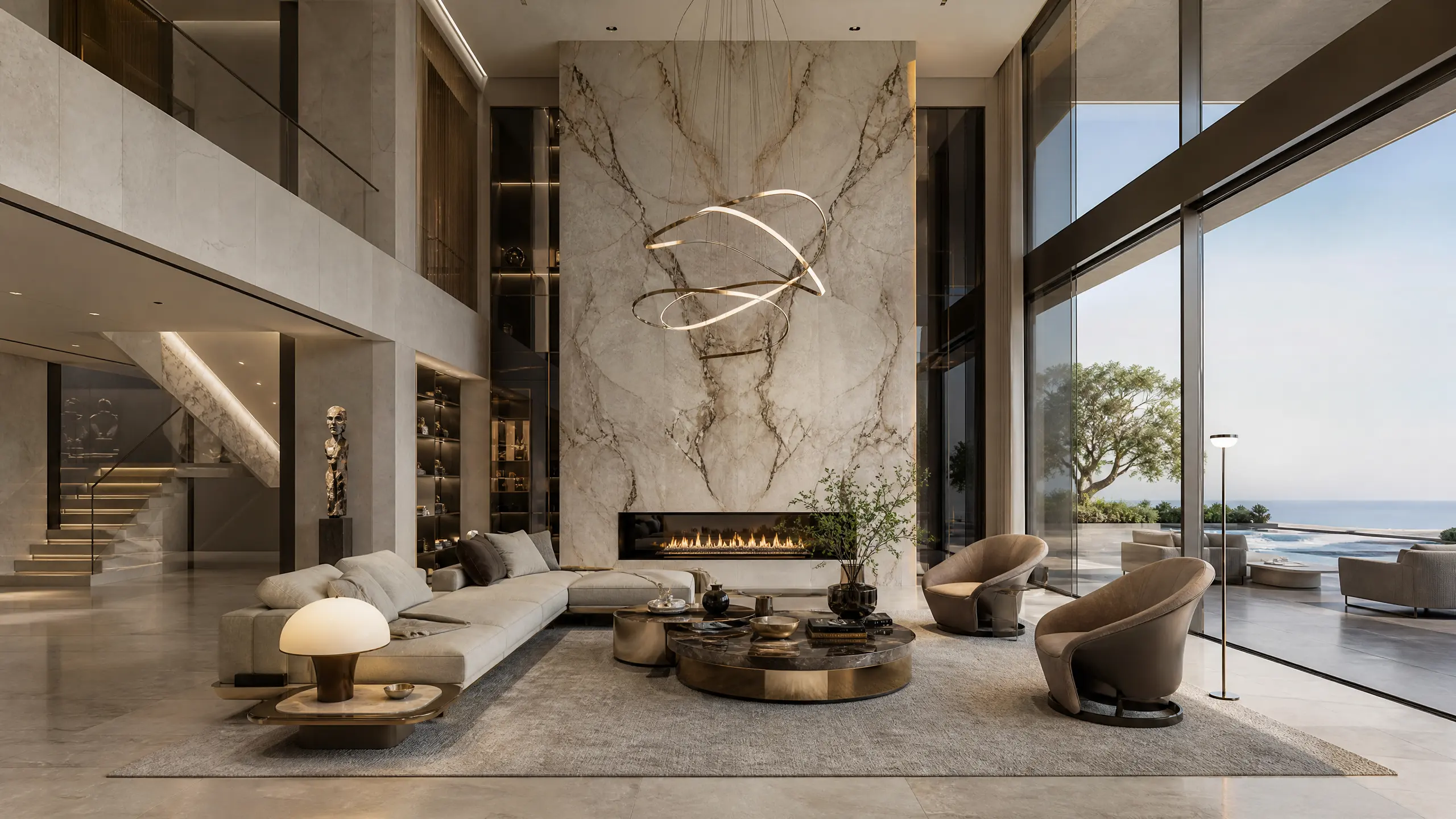
Contemporary Luxury Villa Interior With Double-Height Marble Fireplace Wall
Modern Classic: Timeless Elegance, Made for Today
The Vibe: Elegant, balanced, and timeless.
Signature Details: Wall paneling, restrained boiserie, symmetrical layouts, sculptural lighting, and a mix of classic architectural details with contemporary furniture.
Modern classic design combines traditional architectural details with contemporary furniture, lighting, and a more relaxed approach to everyday living.
Architectural elements such as symmetry, wall paneling, decorative moldings, and balanced proportions give the space a distinct classic character, while contemporary furniture, modern lighting, and simpler color palettes keep the interior feeling current.
Materials such as herringbone flooring, natural stone, marble accents, and refined metal details can reinforce the sense of craftsmanship without making the home feel overly formal.
The result does not need to look like a traditional European mansion. Instead, classic elements are used selectively to give the home more depth and character, while contemporary furnishings and a comfortable layout keep the space suited to modern living.
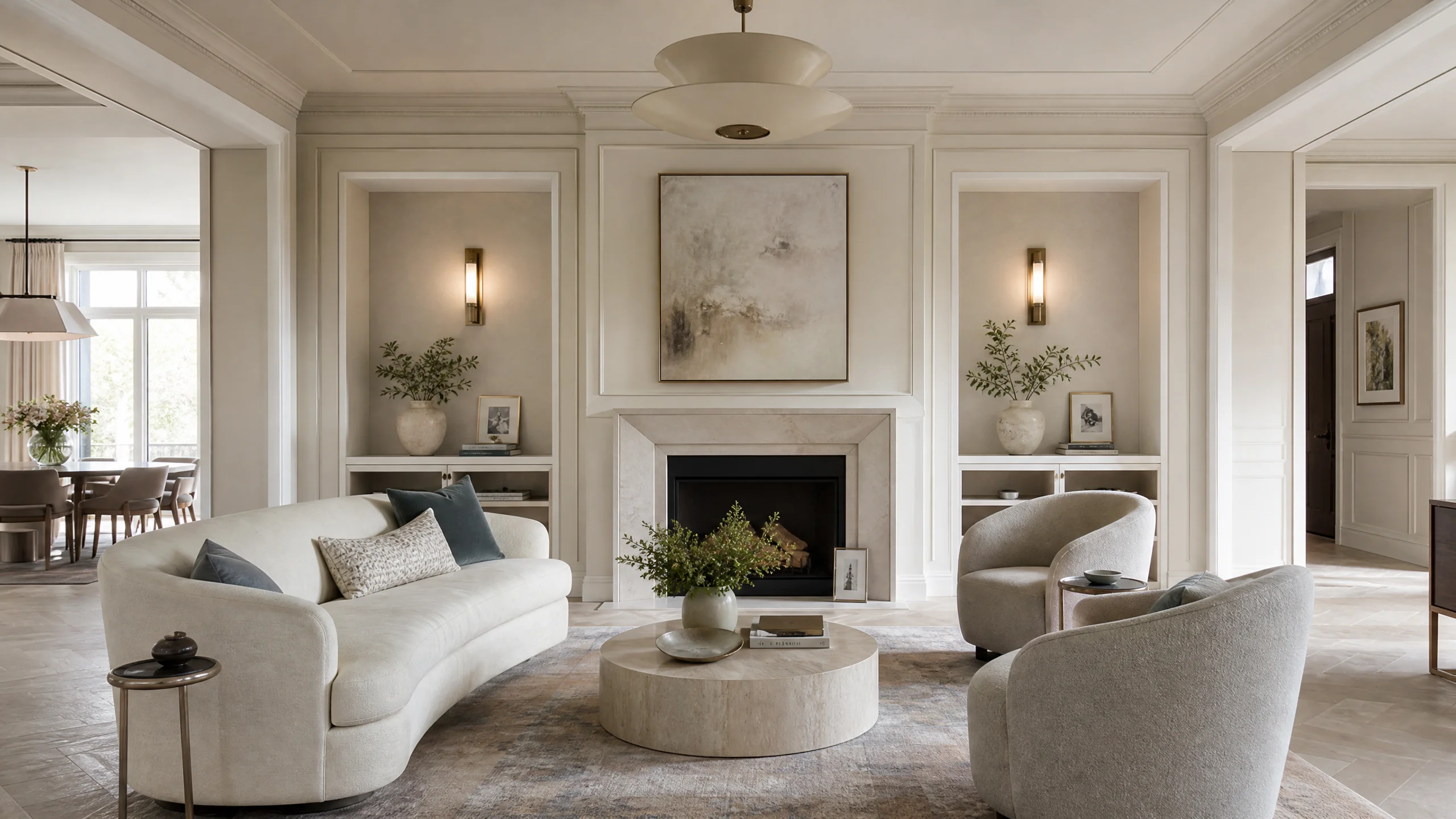
Modern Classic Sitting Area With Symmetric Wall Paneling
Mediterranean Villa Design: Relaxed Indoor-Outdoor Living
The Vibe: Relaxed, sunlit, and connected to the outdoors.
Key Finishes: Limestone or travertine, textured plaster, earthy or sun-washed tones, natural wood, and softly aged or brushed metal details.
Modern Mediterranean design takes the relaxed character of traditional Mediterranean homes and gives it a cleaner, more contemporary interpretation.
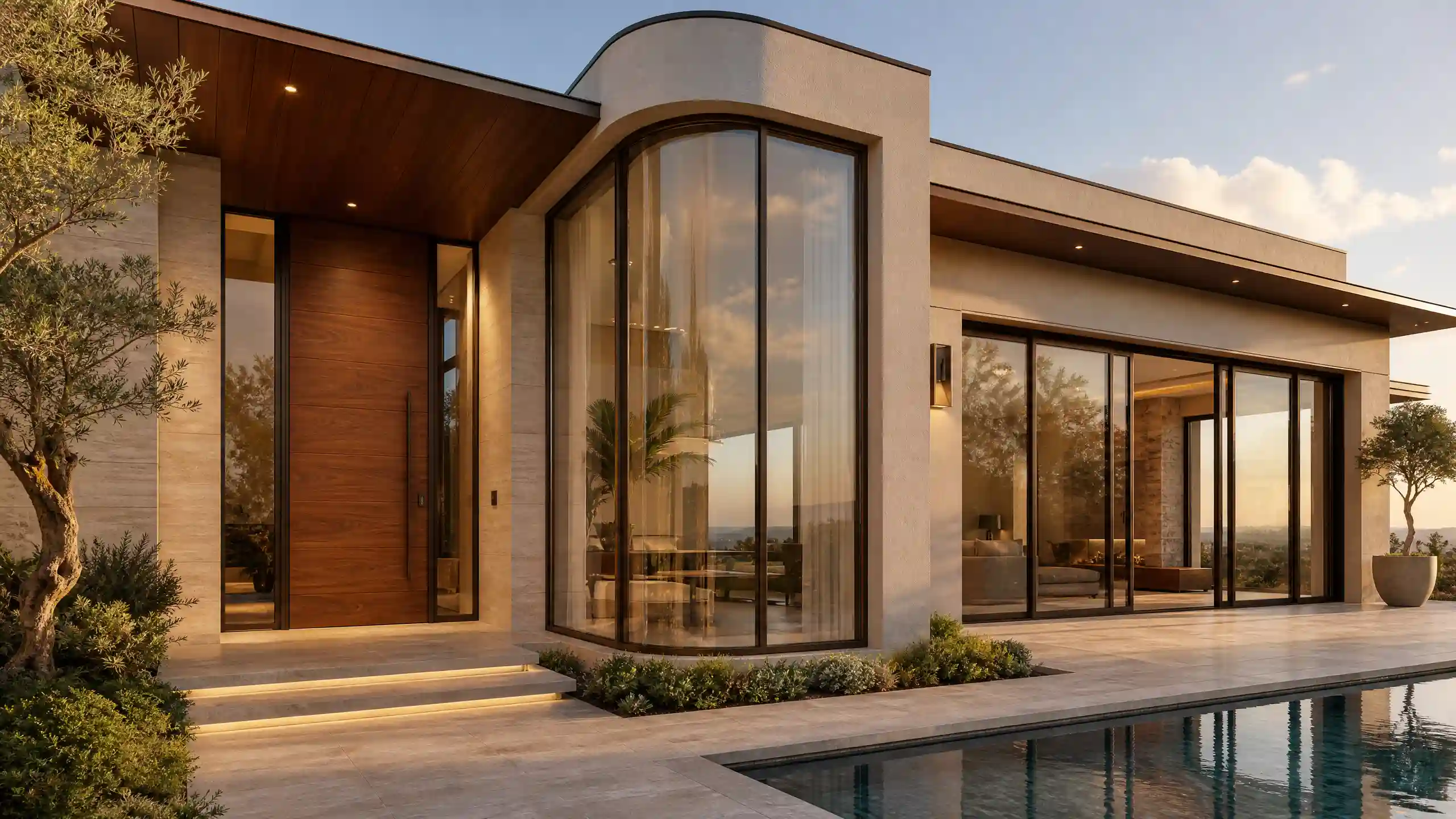
Natural stone, textured plaster, muted earthy tones, and carefully selected wood and metal finishes can create a relaxed and welcoming atmosphere without feeling overly rustic. Soft curves, generous openings, shaded terraces, and tactile surfaces further strengthen the connection between the interior and its surroundings.
Outdoor areas play an important role in the overall design, with terraces, courtyards, shaded spaces, and large windows extending the living experience beyond the interior. This makes the style particularly well suited to villas in warm climates or homeowners who want a home that feels relaxed, open, and closely connected to outdoor living.
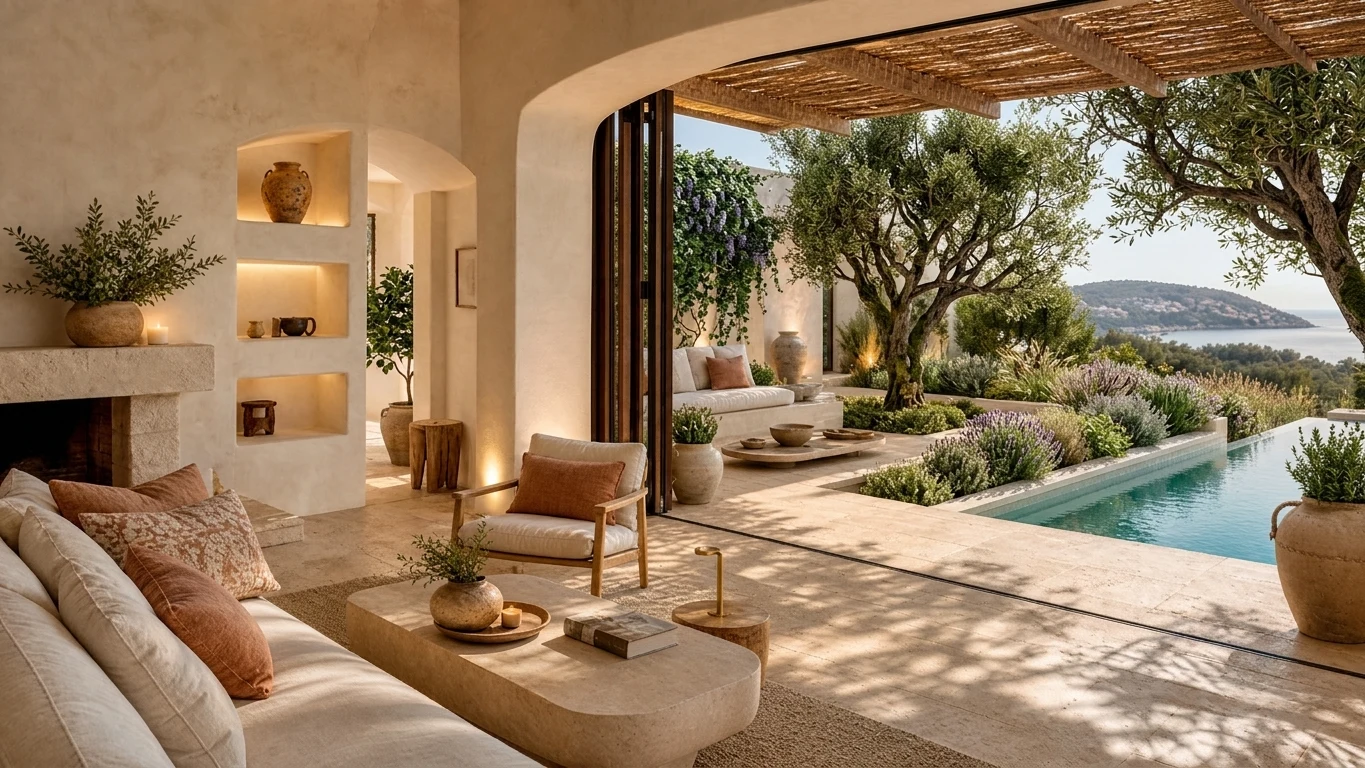
Luxury Mediterranean Villa Patio With Outdoor Lounge & Pool
Organic Modern: Nature, Texture, and Comfort
The Vibe: Warm, relaxed, and naturally sophisticated.
Signature Details: Natural stone, light wood, textured plaster, organic shapes, tactile fabrics, curved furniture, and layered lighting.
Organic modern design brings the simplicity of contemporary interiors together with natural materials, softer forms, and tactile textures. Rather than relying on a highly polished or uniform look, it creates visual interest through the contrast between clean architectural lines and more organic elements.
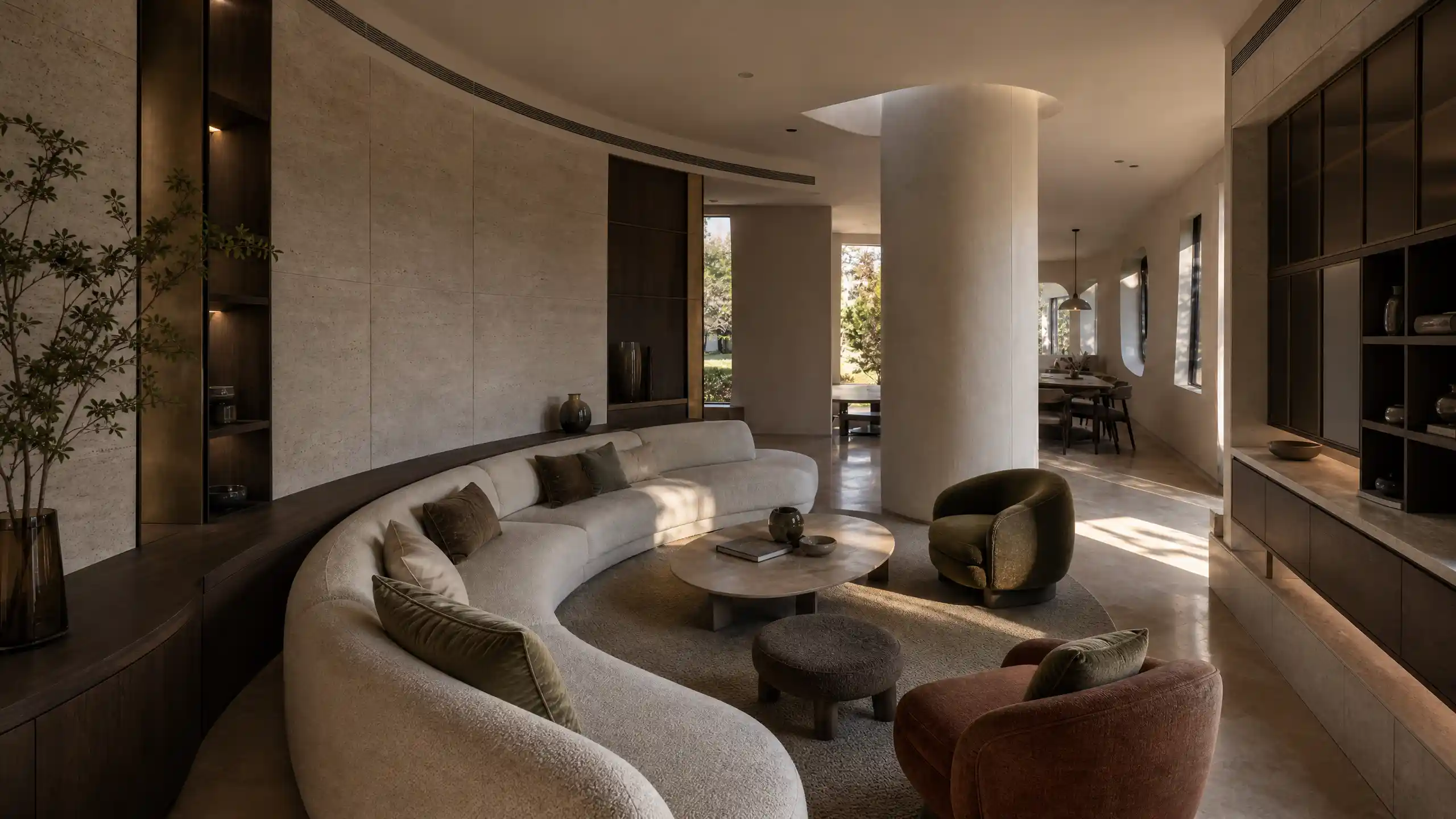
Natural stone, wood, textured plaster, woven fabrics, and matte finishes can be layered to create depth and warmth. Curved furniture, rounded architectural details, and subtle variations in texture help soften larger spaces while maintaining a clean and contemporary overall appearance.
The style also works well with generous windows, garden views, terraces, and other elements that strengthen the relationship between the interior and the natural surroundings.
It is particularly appealing to homeowners who want a contemporary villa that feels sophisticated and well-considered, but also comfortable, tactile, and connected to nature.
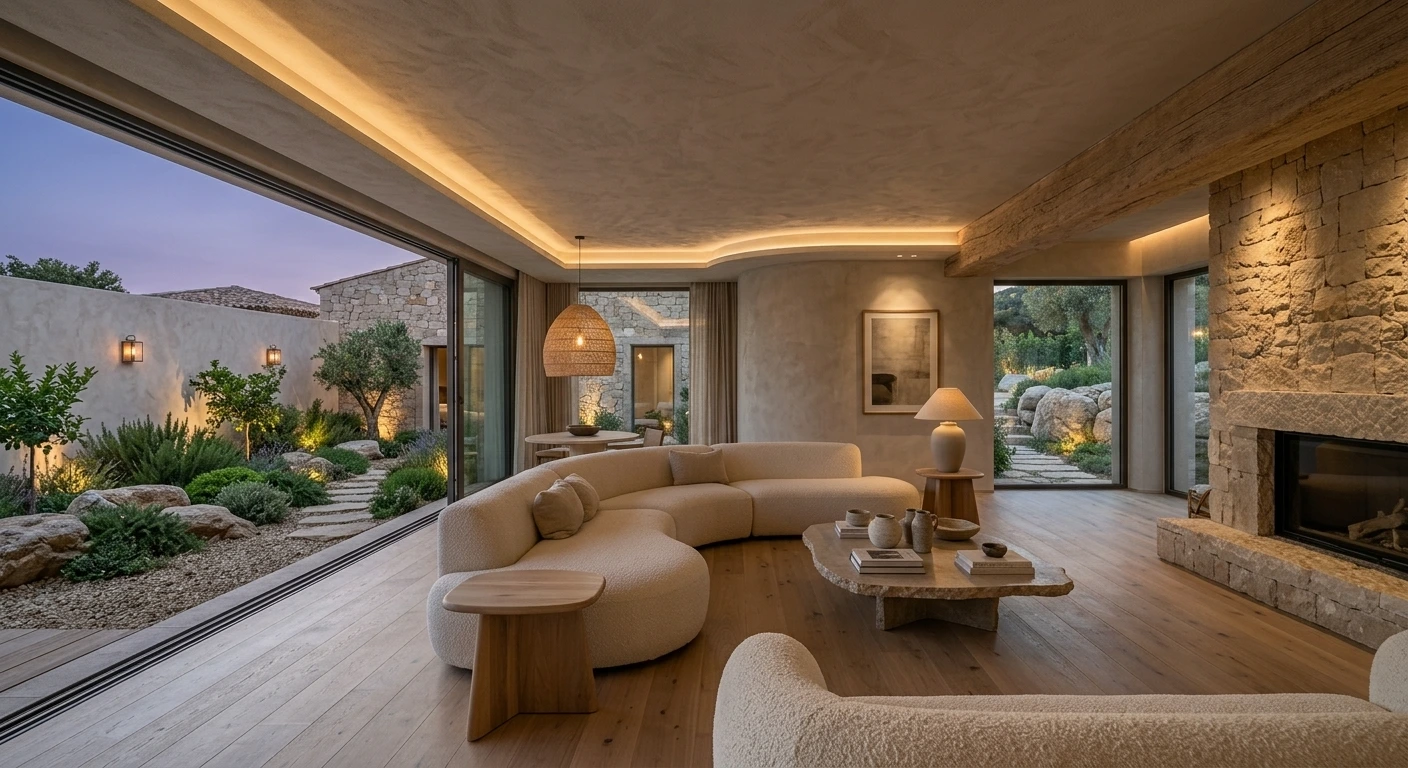
Organic Modern Luxury Villa Living Space & Private Garden
Emerging Trends in Luxury Villa Design
Villa design is changing, but that does not mean every new home needs to follow the latest trend.
In fact, many of the latest directions in luxury villa design are less about following trends and more about creating homes that feel warmer, more personal, more comfortable, and easier to live in.
Today, that can mean a softer color palette, more tactile materials, furniture with stronger character, better lighting, or a kitchen and primary suite designed around the way a family actually lives.
Across different villa styles, several ideas are becoming increasingly common.
Warmer, More Natural Color Palettes
Cool whites and strong black-and-white contrasts are gradually giving way to warmer, more understated combinations.
Soft ivory, beige, taupe, warm gray, muted green, and earthy tones create a calmer background for furniture, artwork, and architectural features. These colors also work particularly well with natural stone, light wood, textured fabrics, and brushed metal finishes.
In a large villa, a warm neutral palette can also help different rooms feel connected without making every space look identical. A living room might combine ivory walls with travertine and light oak, while a bedroom introduces deeper taupe or muted green through upholstery and soft furnishings.
The result is a home that feels comfortable and sophisticated without relying on dramatic colors to make an impression.
More Texture, Less Decoration
One noticeable shift in luxury interiors is the use of material texture instead of excessive decoration.
A piece of stone with natural movement, a textured wall finish, fluted or paneled surfaces, a matte cabinet finish, or a tactile fabric can add plenty of visual interest without filling the room with decorative objects.
This approach works across many villa styles. Even a minimalist interior can feel rich when different textures are layered carefully.
For example, a quiet living room might combine large-format stone flooring, a textured plaster wall, a sculptural sofa, and a natural stone coffee table. There may be fewer decorative pieces, but each material has enough character to contribute to the space.
This is also changing the way homeowners think about luxury materials. Instead of using marble or metal simply because they look expensive, designers are increasingly choosing materials for their texture, proportion, finish, and relationship with the rest of the room.
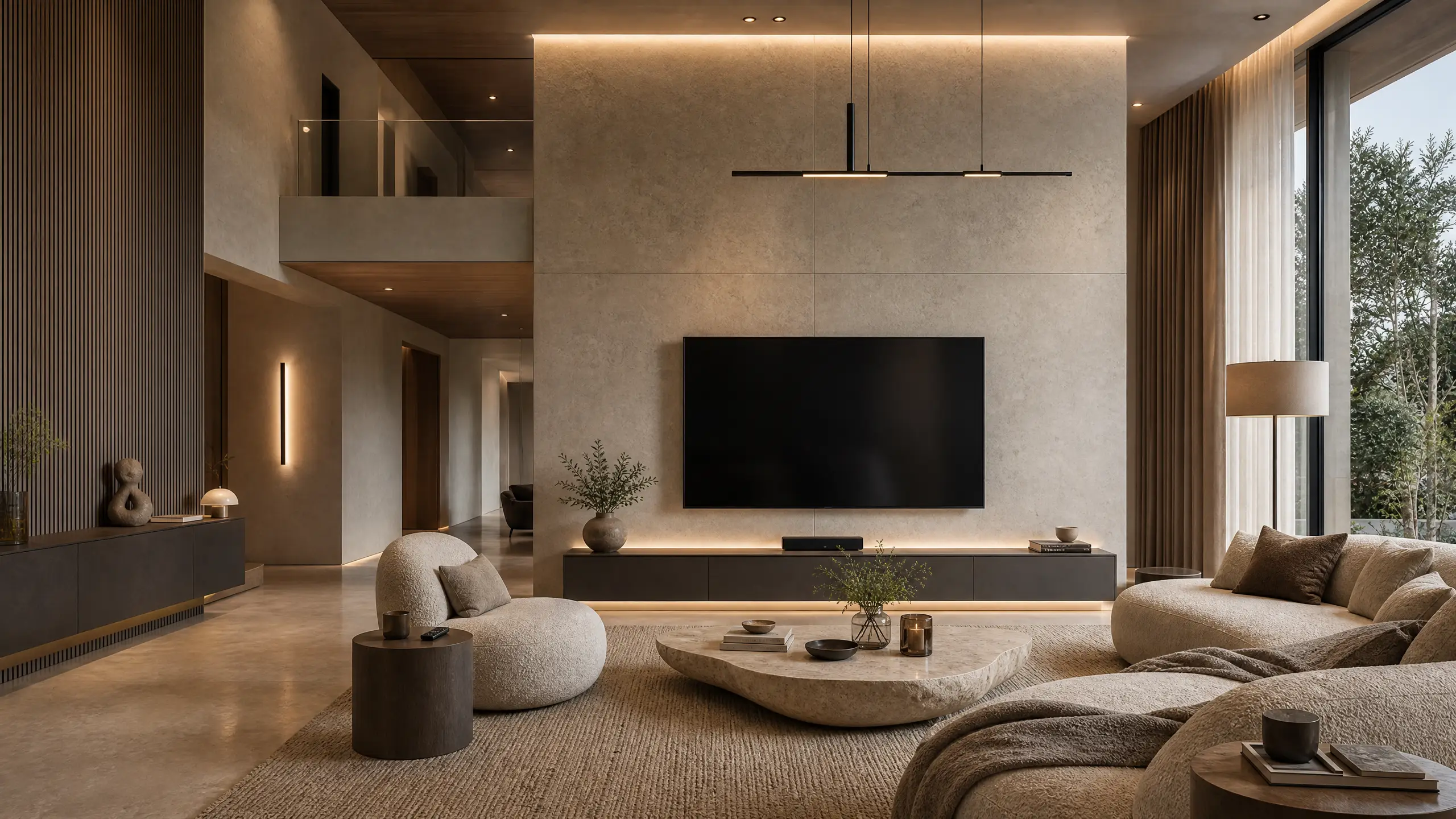
Double-Height Luxury Villa Great Room With Textured TV Wall
Sculptural Furniture With a More Relaxed Feel
Furniture is becoming an increasingly important part of the visual identity of a room.
Curved sofas, sculptural lounge chairs, distinctive dining tables, and rounded forms can soften architectural spaces and create natural focal points. At the same time, comfort is becoming just as important as appearance.
For large villas, furniture also needs to relate to the scale of the space. A dramatic piece may look impressive, but it should still leave enough room for comfortable movement and everyday use.
Rather than filling a large living room with furniture simply to make it feel complete, a better approach is to create a few clearly defined areas—a generous conversation area, a quieter reading corner, or a lounge facing the garden.
This makes the space feel larger while giving the furniture a more intentional role in the overall architecture.
Layered Lighting and More Discreet Technology
Lighting is moving beyond the traditional idea of one main ceiling fixture.
Contemporary villas often combine ambient, task, and accent lighting to create different levels of illumination throughout a room. Concealed lighting can highlight architectural details, while pendant lights, wall lights, and focused accent lighting can bring attention to furniture, artwork, or material textures.
In a luxury villa, this can go much further than simply adding more lights.
Linear lighting can be integrated into cabinetry, wardrobes, ceilings, and wall details. Architectural lighting can emphasize a stone feature wall or a sculptural staircase, while bedside and vanity lighting can be controlled independently for a more comfortable evening environment.
Smart lighting is also becoming more relevant. Homeowners can adjust brightness, lighting zones, and different scenes depending on whether they are relaxing, entertaining, dining, or getting ready for the evening.
The goal is not to make technology the focus. Ideally, the technology becomes almost invisible, integrated into the architecture and custom joinery so that the room remains visually clean.
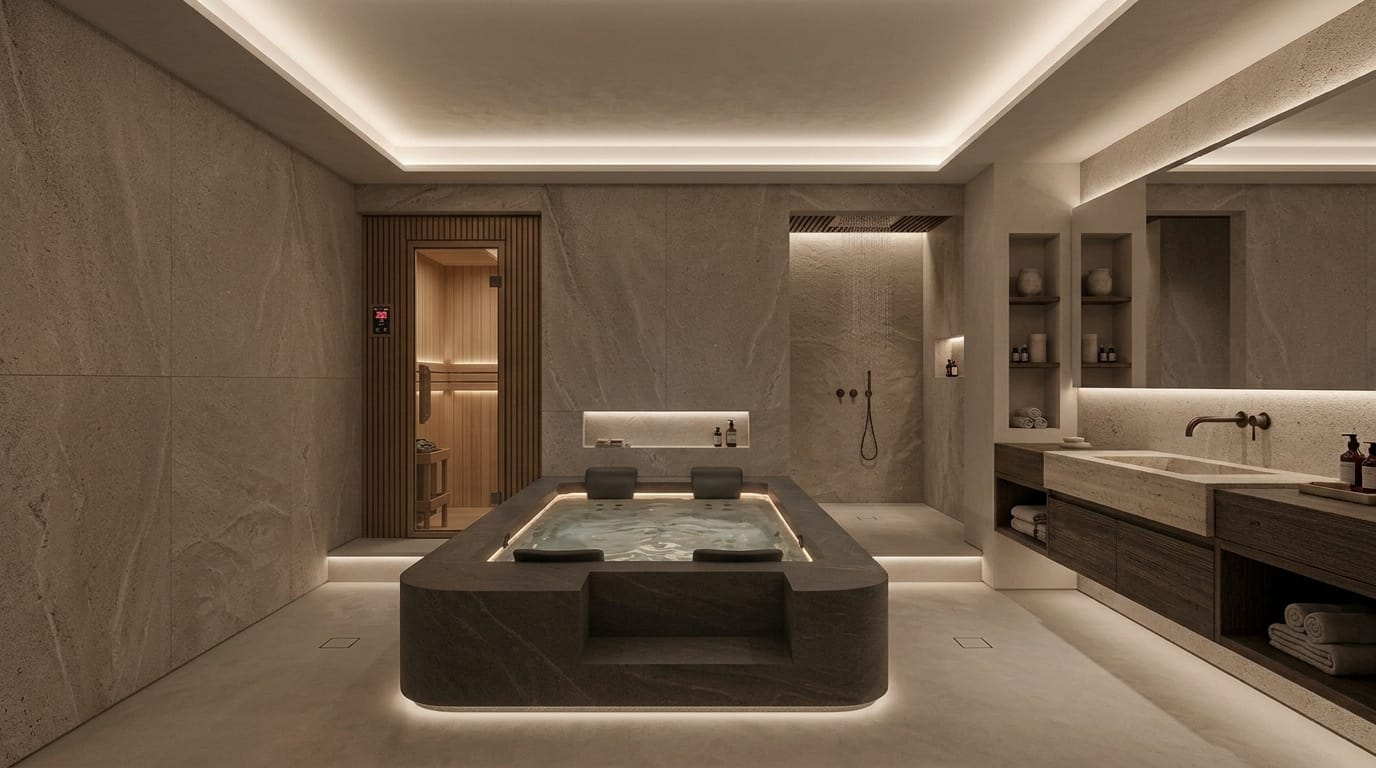
Luxury Basement Spa Room With Built-In Jacuzzi & Sauna
A Stronger Connection Between Indoor and Outdoor Spaces
For many villas, outdoor areas are becoming an extension of the home’s overall design rather than a completely separate space.
Large glazed openings, slim sliding doors, comfortable outdoor furniture, terraces, and carefully considered landscaping can create a stronger visual connection between inside and outside.
Materials can reinforce this relationship as well. Large-format porcelain or natural stone flooring can continue from an interior living area onto a covered terrace, using appropriate outdoor finishes for durability and slip resistance.
When the colors, textures, and proportions are coordinated, the transition between the living room and terrace feels much more natural.
The result is not simply a larger-looking room. It creates more ways to use the home—morning coffee outside, relaxed family dinners, evening entertaining, or simply opening the living area toward the garden on a pleasant day.
More Flexible Kitchen Planning
The kitchen is also becoming more closely connected to the way people actually live and entertain.
One increasingly popular solution in larger villas is the dual-kitchen layout.
The main kitchen remains open to the living and dining areas, with a statement island, refined cabinetry, integrated appliances, and enough space for family interaction and entertaining. Behind it, a separate prep kitchen or back kitchen provides space for heavier cooking, food preparation, appliance storage, and cleanup.
This arrangement allows the visible kitchen to remain calm and organized when guests arrive without sacrificing the practicality of a fully functional cooking space.
For homeowners who entertain frequently, it can be a much more useful solution than simply building a larger single kitchen.
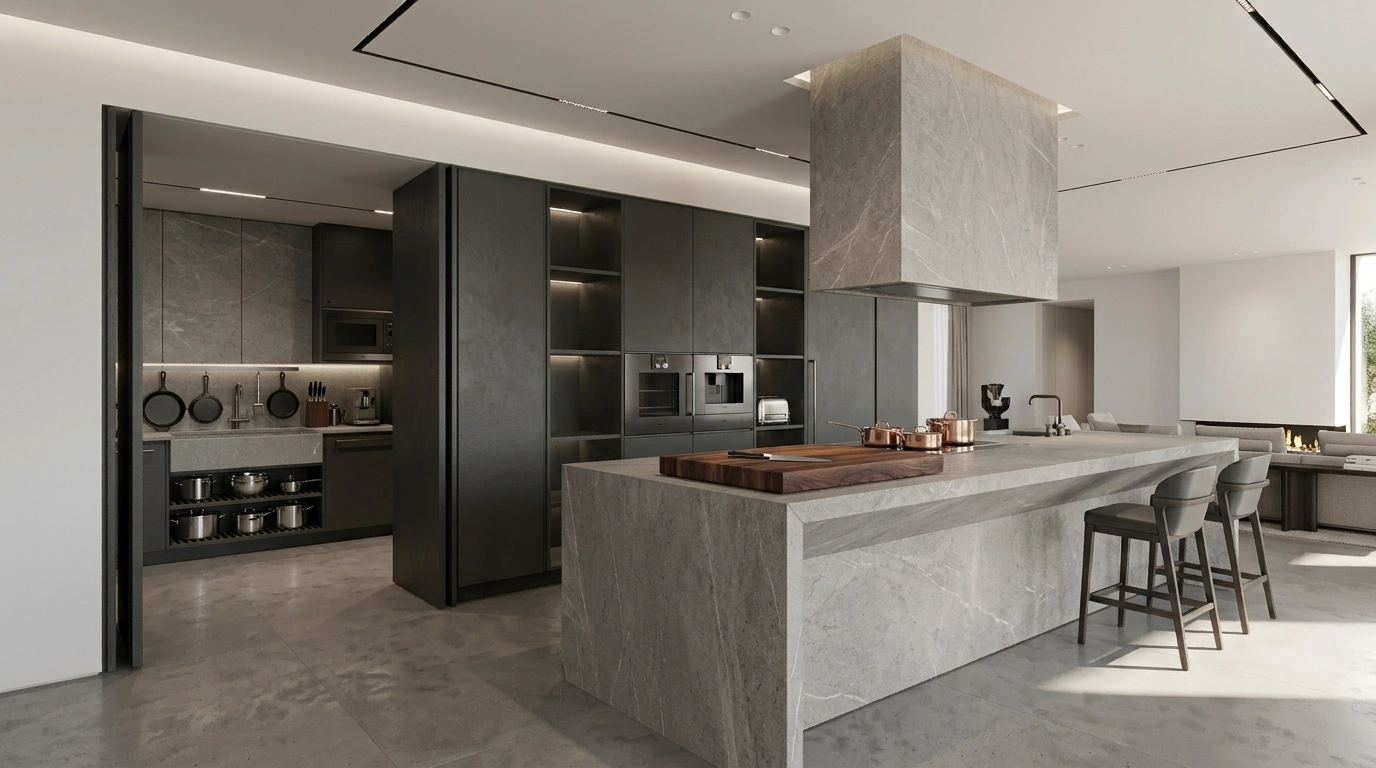
Minimalist Luxury Kitchen With Marble Island
Hotel-Inspired Primary Suites
The primary suite is increasingly being designed as a private retreat rather than simply a bedroom with an attached bathroom.
In larger villas, the bedroom, bathroom, and walk-in wardrobe can be planned as a connected private zone, with each space serving a different part of the daily routine.
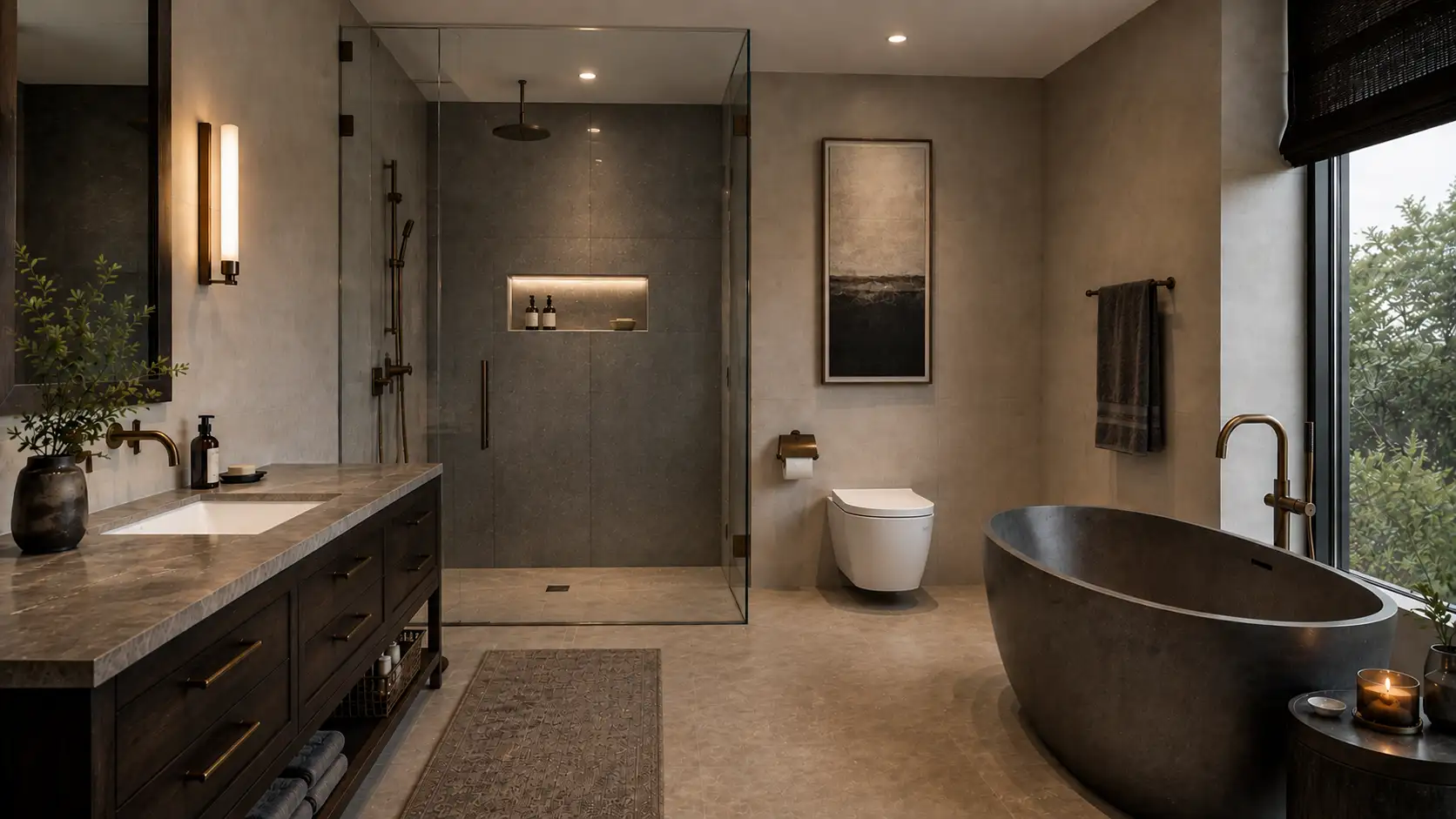
The bathroom may take cues from a high-end spa, with a freestanding soaking tub, dual walk-in showers, concealed fixtures, floating vanities, and carefully layered ambient lighting.
The walk-in wardrobe can feel more like a private boutique, combining glass-fronted cabinetry, built-in storage, a central island, integrated lighting, and dedicated spaces for clothing, accessories, and jewelry.
The important point is not to recreate a hotel literally. Instead, these details bring the comfort, organization, and sense of privacy associated with a luxury retreat into everyday life.
More Personal and Less “Show Home”
Perhaps the most important trend is a move toward interiors that feel personal rather than staged.
Homeowners are increasingly interested in spaces that reflect their routines, collections, interests, and preferences instead of simply reproducing a style seen in a showroom or design magazine.
A dining area designed around frequent family gatherings, a comfortable reading corner overlooking the garden, a private dressing space organized around a specific wardrobe, or a kitchen designed around how the family cooks can all make a villa feel more individual.
This also means that different rooms do not necessarily need to follow exactly the same visual formula.
A villa can combine contemporary architecture with a warmer living room, a more dramatic dining space, a spa-inspired bathroom, and a quieter bedroom. What connects them is not identical furniture or finishes, but a consistent approach to proportion, materials, craftsmanship, and comfort.
Luxury, in this sense, is becoming less about showing how much has been spent and more about creating a home that feels right for the people living in it.
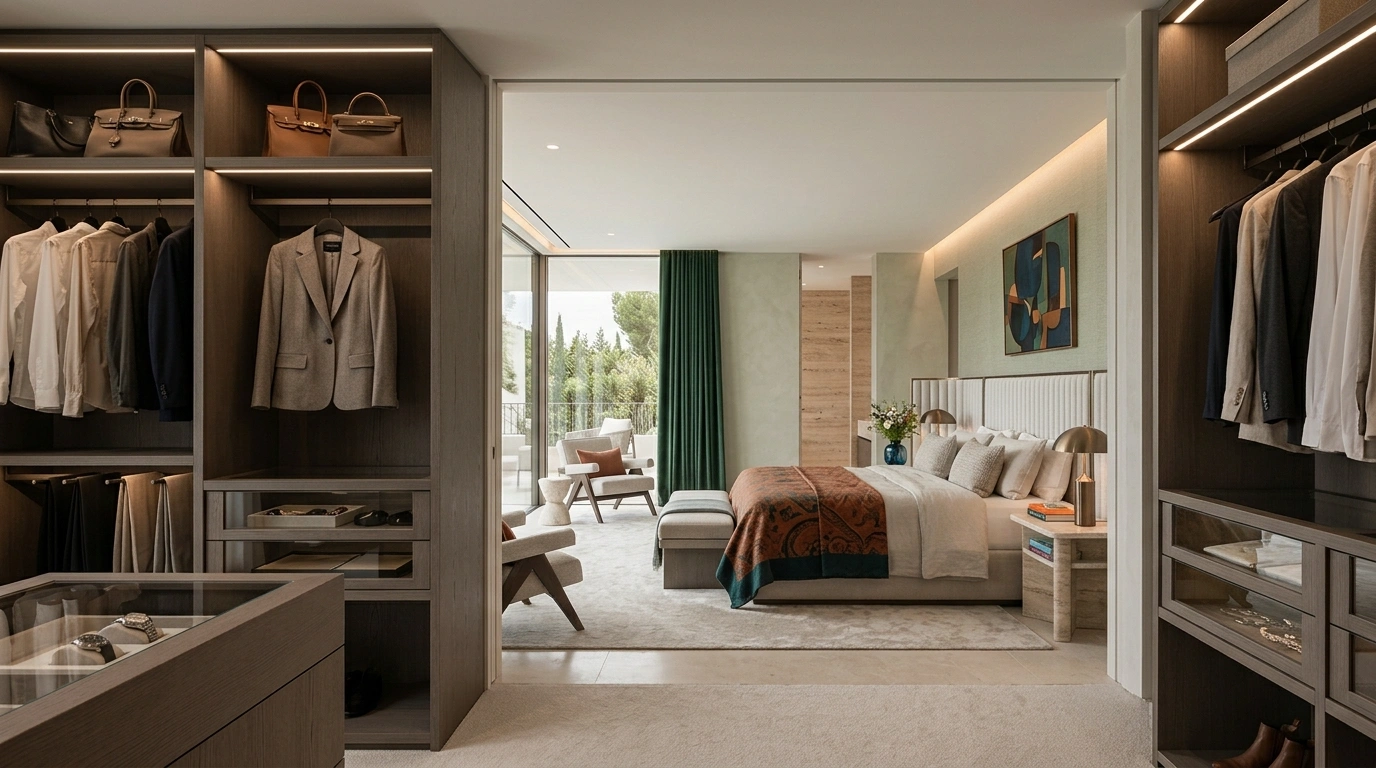
Luxury Villa Primary Suite With Walk-In Closet
Designing for How You Actually Live
The best luxury villa designs are not necessarily the ones with the most expensive materials or the most impressive features.
They are the ones where architecture, furniture, lighting, storage, technology, and materials work together around everyday life.
A well-planned kitchen makes entertaining easier. A carefully designed wardrobe makes mornings simpler. Layered lighting changes the atmosphere throughout the day. Indoor-outdoor spaces create more opportunities to use the home. And thoughtful material choices give each room its own character without making the villa feel disconnected.
That is where current villa design is heading: less about following a single style, and more about creating a home that feels considered, personal, and genuinely comfortable to live in.
What Defines a Luxury Villa Aesthetic?
When people talk about luxury villa design, it is easy to focus on individual features—a dramatic staircase, a large stone wall, a statement chandelier, or an impressive piece of furniture. But these details alone do not determine how a home feels.
What makes a villa feel well designed is usually the relationship between its different elements. The architecture, materials, furniture, lighting, and decorative details need to work together, with the right sense of proportion, scale, texture, and visual continuity.
Start With the Architecture
The architecture gives you the starting point for the overall design direction.
A villa with clean lines, large glass openings, and simple geometric forms may naturally suit a modern or minimalist interior. A home with symmetrical proportions, detailed moldings, or more traditional architectural features may work better with a modern classic approach.
Scale matters just as much as style. Large villas with high ceilings and generous rooms need furniture, doors, cabinetry, lighting, and other architectural elements that feel appropriately sized for the space. Smaller or more intimate areas may need a more restrained approach to keep the proportions comfortable.
The surroundings matter, too. A coastal property, for instance, may call for a lighter and more relaxed aesthetic, while an urban villa may suit a more structured contemporary style.
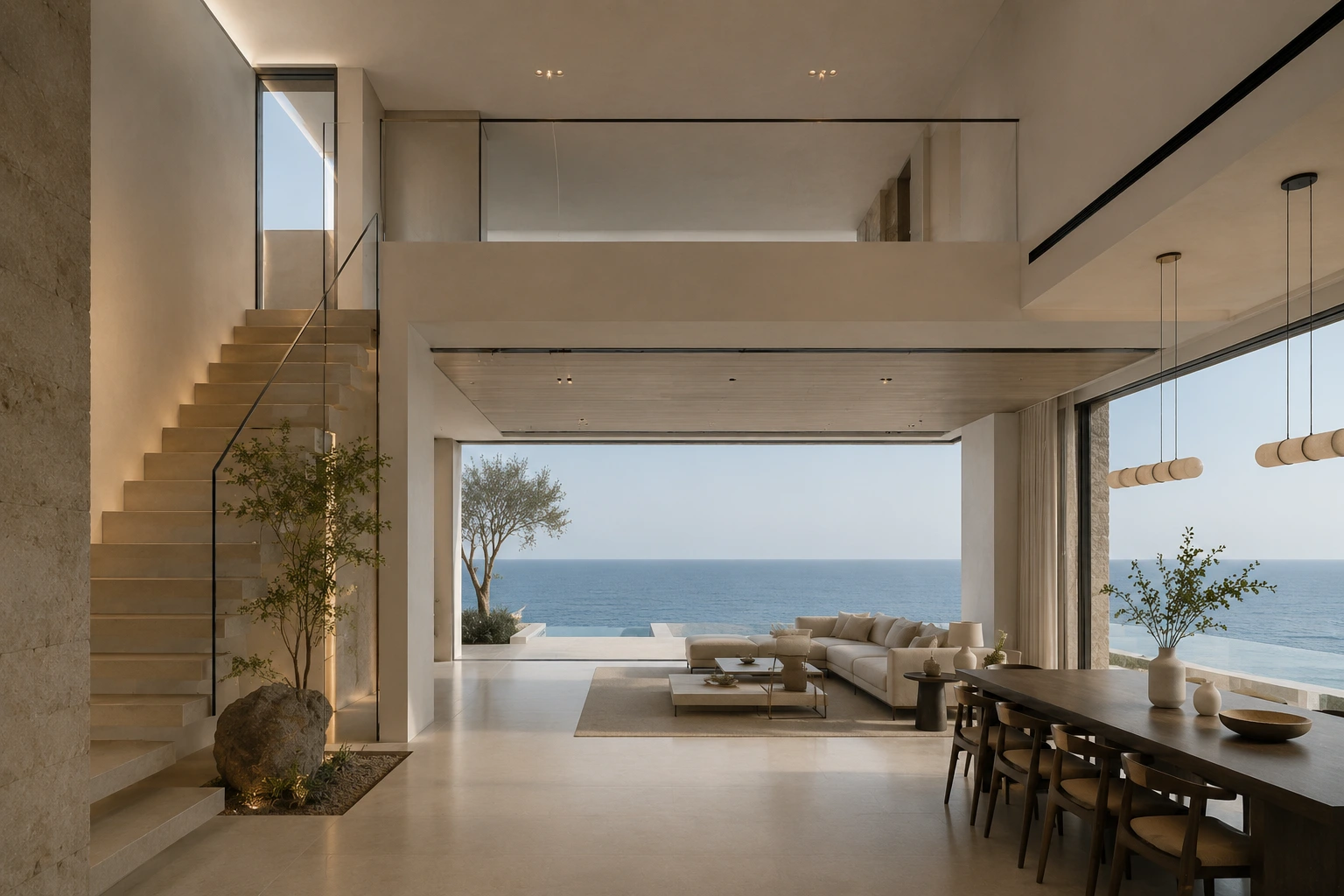
Seaside Villa Interior Design With Floor-To-Ceiling Windows
Let Materials Set the Tone
Materials can change the feeling of a room even when the layout stays exactly the same.
Warm wood tones can make a space feel more comfortable, while natural stone can add texture and visual weight. Metal details can bring a sharper contemporary touch, while linen, leather, and other soft materials can make larger spaces feel more inviting.
Surface finish matters, too. The same stone can create a very different impression in a polished, honed, or textured finish. Subtle differences in grain, sheen, color, and texture can add depth without making the interior feel overly decorated.
The important part is how these materials work together. Instead of choosing every surface separately, think about the overall combination of colors, textures, and finishes you want to carry throughout the home.
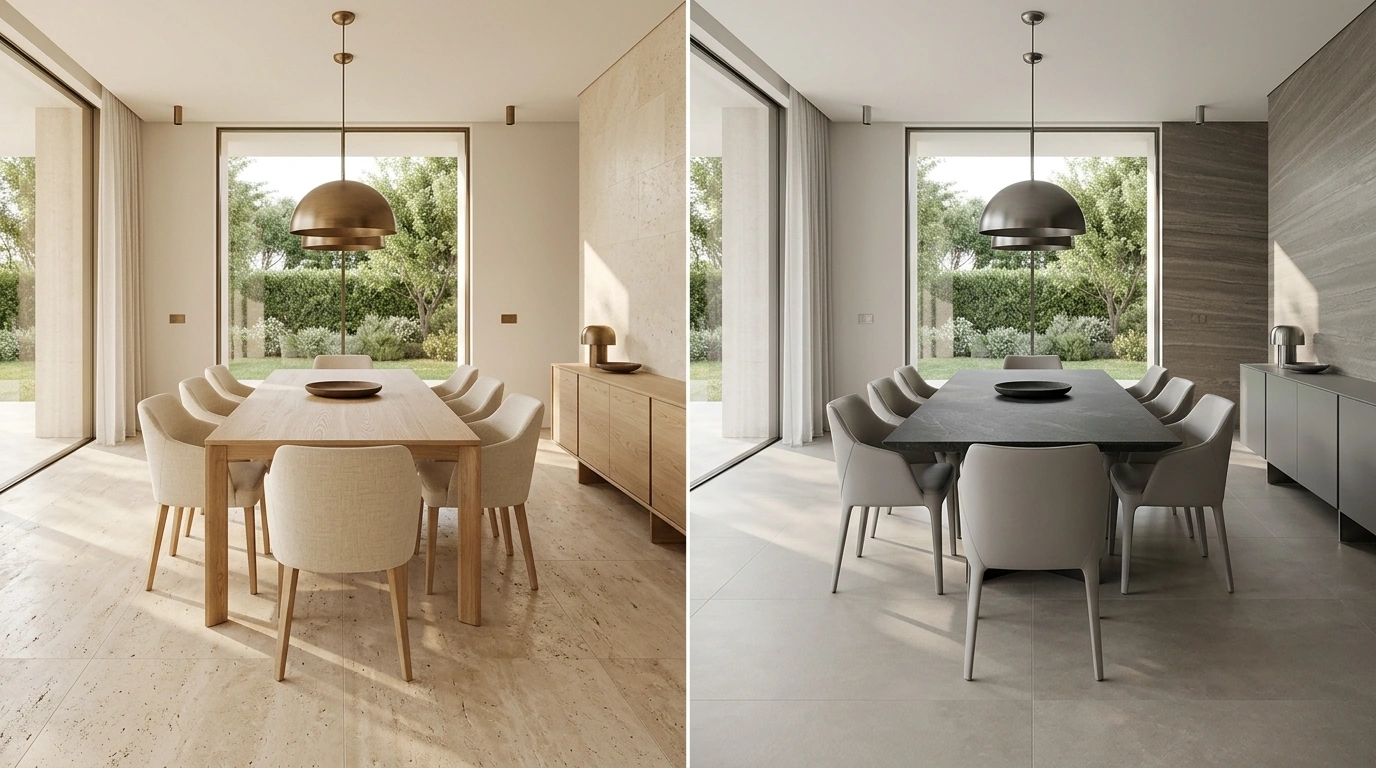
Two-panel Material Comparison of A Modern Dining Room
Create a Sense of Continuity Throughout the Home
A luxury villa does not need to look identical from room to room. In fact, some variation can make the home feel more personal and interesting.
True luxury in modern villa design is rarely about flashiness or overly decorated surfaces. Instead, it comes from a few core design principles that work quietly in the background—proportion and scale, material quality, and a sense of spatial cohesion.
What matters is that the different spaces still feel connected. Flooring, cabinetry details, hardware finishes, stone selections, lighting styles, and color palettes can create subtle visual links between living areas, bedrooms, bathrooms, and outdoor spaces.
This sense of continuity is what turns a collection of beautifully designed rooms into a cohesive home.
Ultimately, a strong villa aesthetic does not come from following one formula. It comes from making the architecture, materials, furniture, lighting, and spatial details work together while leaving enough room for the homeowner’s personality to come through.
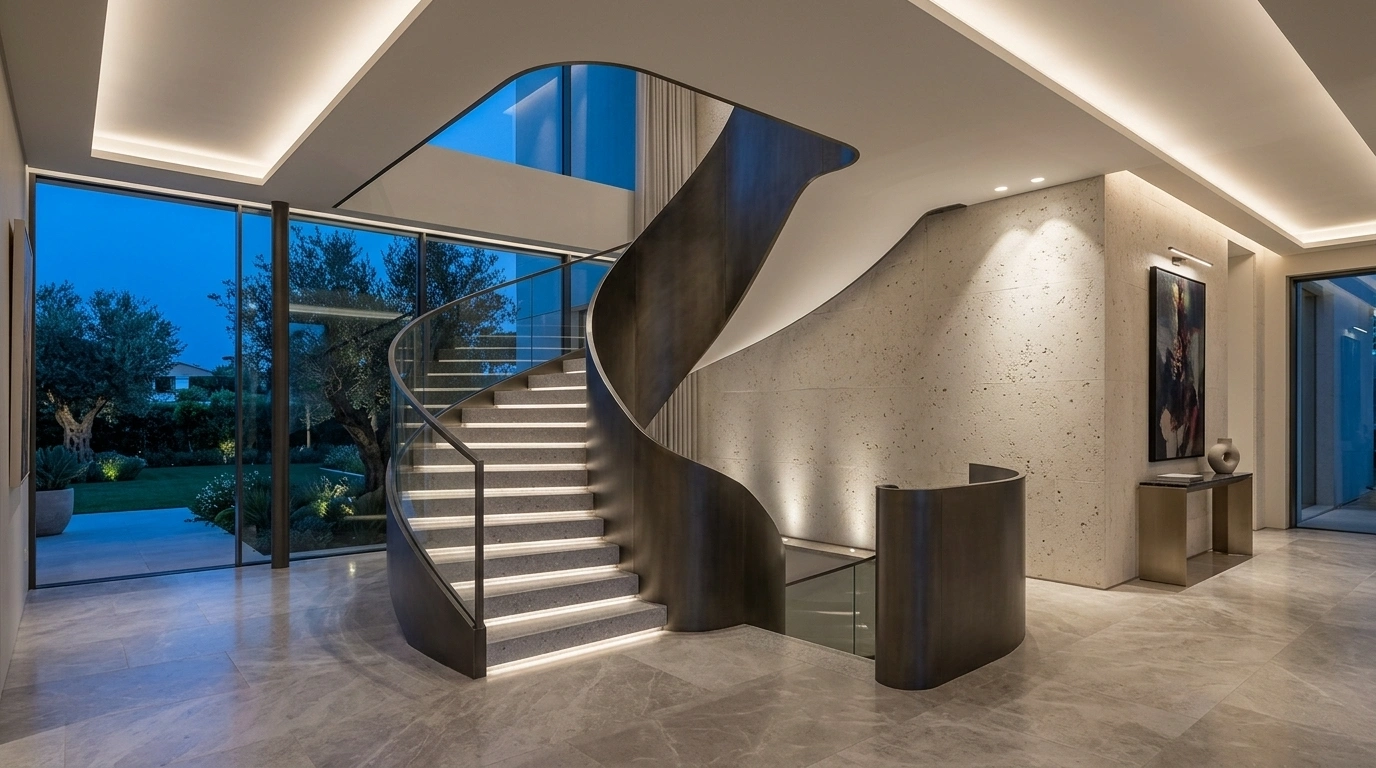
Architectural Lighting in a Luxury Villa Entrance Hall
How George Group Brings Your Villa Vision Together
Finding a villa style you love is only the beginning. Turning that vision into a complete home involves many decisions, from materials and cabinetry to furniture, lighting, bathroom solutions, and other residential elements. For a large villa project, keeping all of these choices consistent can also become difficult when they are sourced and coordinated separately.
George Group brings whole-home design, home furnishings, and building materials together through a coordinated range of solutions for residential spaces. Our offering includes furniture, lighting, kitchen cabinets, wardrobes, bathroom fittings, doors and windows, flooring, marble, ceramic tiles, home appliances, and other elements needed to create a complete home.
Whether you are furnishing a new villa or planning a whole-house customization project, we help you develop a consistent design direction and carry it across different spaces—from the living room and kitchen to bedrooms, bathrooms, and outdoor areas.
Instead of selecting each product separately, you can explore materials, finishes, furnishings, and functional elements as part of a more cohesive whole-house approach. Explore our whole-house customization solutions now!
Conclusion
There is no single formula for creating a luxury villa. The styles and trends above can offer inspiration, but they should not define every decision. What matters more is how the home feels as you move through it—from the entrance and living spaces to the kitchen, primary suite, and outdoor areas.
In the end, the best villa is not the one that follows the most trends. It is the one that feels distinctly yours.
If you’re planning a luxury villa and looking to bring your design vision, materials, and furnishings together across the entire home, George Group can help. Contact us today to learn more!
FAQs
What is the most popular luxury villa design style?
There is no single style that works for every villa. Contemporary luxury, modern minimalist, modern classic, Mediterranean, and organic modern are all popular choices. The right direction depends on the villa’s architecture, location, surroundings, and the homeowner’s preferences.
How do I choose the right design style for my villa?
Start with the architecture and location of the property, then consider how you want to live in the space. Look at the level of formality, materials, colors, and connection to the outdoors you prefer. Choosing one primary design direction can help keep the overall home cohesive.
What materials are commonly used in luxury villa design?
Natural stone, marble, porcelain, wood, glass, metal, and textured fabrics are commonly used in luxury villas. The quality of the material matters, but so does how different finishes, colors, textures, and patterns work together across the home.
How can I make a large villa feel cohesive?
Use a consistent design language rather than making every room identical. Related flooring, stone, cabinetry details, hardware finishes, colors, and architectural elements can create subtle connections between spaces while still allowing individual rooms to have their own character.
Is it possible to combine different luxury villa design styles?
Yes. Many well-designed villas combine elements from different styles. The key is to establish one primary design direction and introduce other influences selectively through materials, furniture, lighting, or architectural details. Consistent proportions and a coordinated material palette can help different influences feel intentional rather than disconnected.
What should I consider before planning a luxury villa interior?
Consider the architecture, space planning, household routines, storage needs, entertaining habits, material palette, lighting, and relationship between indoor and outdoor spaces. Planning these elements together early can help avoid disconnected design decisions and make the final home feel more cohesive.